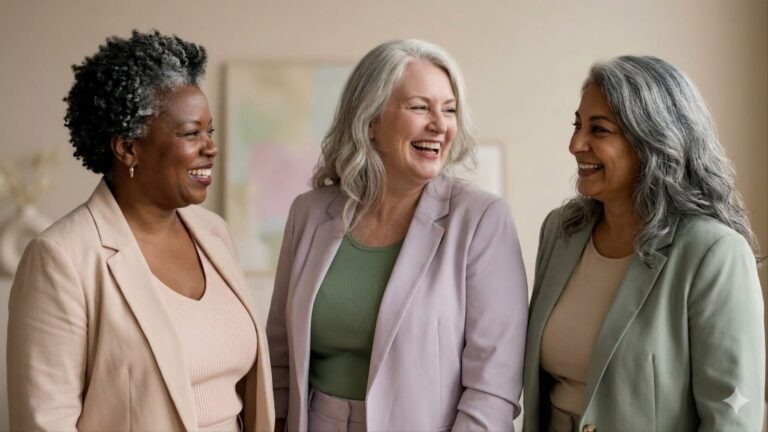
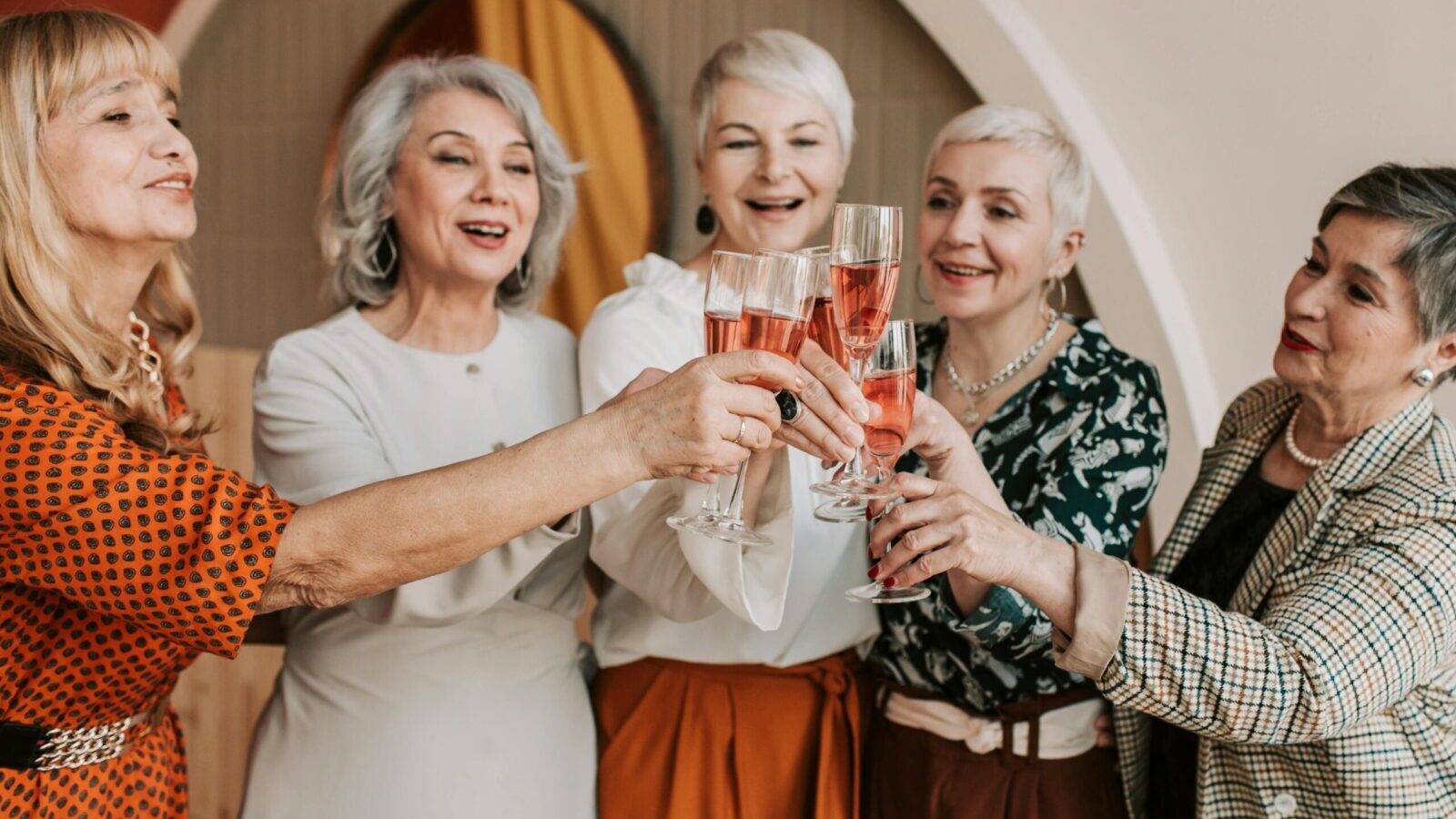
We are absolutely not living the same lives as our mothers and grandmothers, are we? We’re healthier, more educated, navigating tech like pros, and refusing to squeeze ourselves back into the tiny boxes society designed for women in the 1950s. When you look at life after 45, it’s clear we’re rewriting what midlife, ageing and menopause look like—and doing it in our own messy, funny, powerful way.
Life After 45: we are not our mothers’ generation
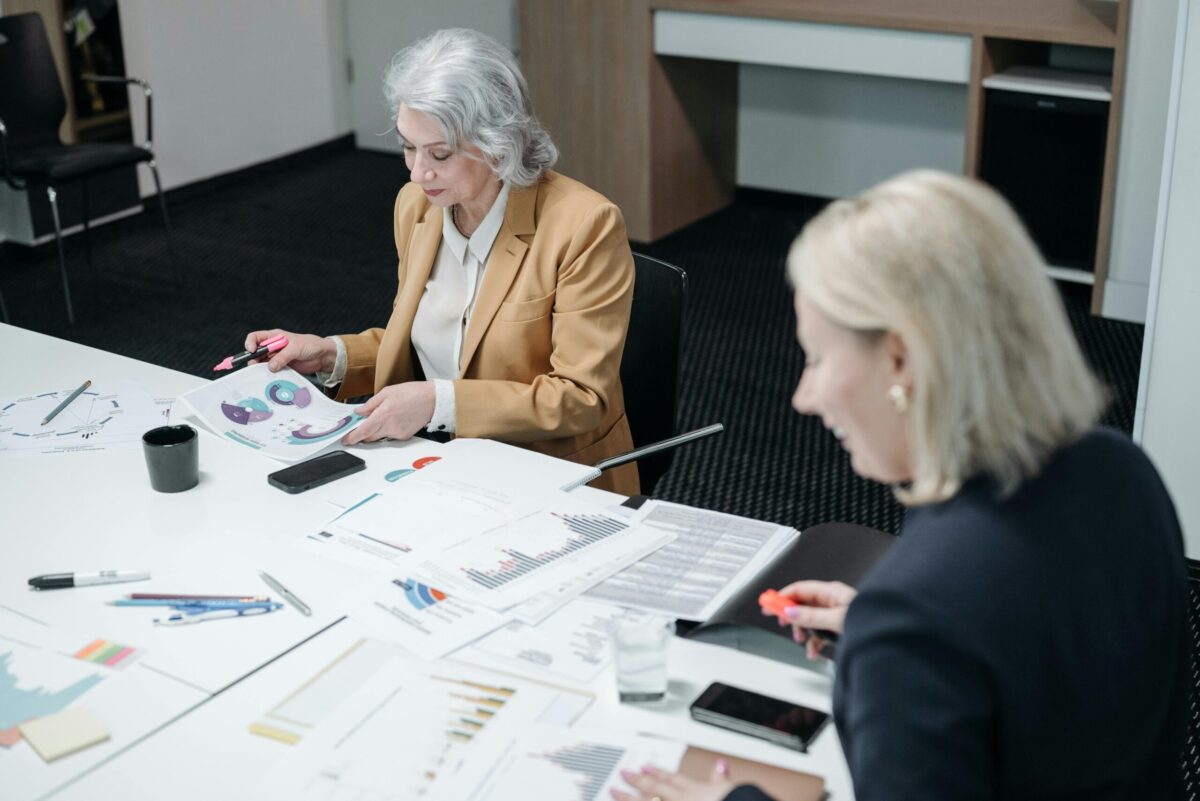
Women over 45 now participate in the workforce at much higher rates than previous generations, often staying in paid work well into their 50s and 60s instead of leaving as soon as children arrived or husbands retired. This shift means we are more economically independent and far less willing to accept a life that doesn’t fit us. We are not just “helping out” with the family income; we are building careers, leading teams, running businesses, and making serious financial decisions for ourselves and our families.
Higher levels of education and long professional experience give many of us the confidence to make our own choices about relationships, living arrangements and lifestyle, instead of following the narrow scripts that dominated our mothers’ lives. We watched earlier generations sacrifice dreams, hobbies, friendships and even their health to keep everyone else afloat. We learned from that. Now we question, we negotiate, we say “no” more often, and we’re no longer afraid to change direction when something stops working for us.
We are living much busier and fuller lives than women before us, juggling careers, kids or grandkids, ageing parents, friendships, hobbies and health—often all at once. We’re on top of our careers (or building new ones), making our own choices around work, money, relationships and home, and we are not “domesticated” by social pressure in the way earlier generations often were. If we like cooking, we cook. If we don’t, we order in or use meal kits and feel zero guilt about it. The days of being judged solely by the state of the house or the contents of the oven are over.
On top of that, many of us are changing careers after 45 or even 50. We are going back to school, starting online courses, becoming coaches, nutritionists, designers, teachers, writers, therapists, or entrepreneurs. We launch new projects when previous generations were expected to start winding down. We are proving—to ourselves and to everyone watching—that there is no age limit on starting again.
Life After 45: redefining midlife, health and menopause
The way we talk about menopause has shifted dramatically. For our mothers and grandmothers, menopause was usually hidden, whispered about, or simply endured in silence. Today, more of us are seeking information, specialist care and community support to manage symptoms and protect our long‑term health. We’re asking questions, challenging doctors when we don’t feel heard, learning about hormones, HRT, sleep, bone density and heart health instead of just “putting up with it.”
Many of us take extra care of our health when the famous “M” arrives, whether we call it menopause, the “big bad wolf,” or just a new hormonal chapter. We track our hot flushes, mood swings and brain fog; we explore nutrition, exercise, therapy, supplements and medical options; we talk openly with friends instead of pretending everything is fine while we suffer alone. By doing this, we are building a new model of menopause—one that is honest, informed and compassionated.
Midlife is also forcing us to look at stress, burnout and mental health in a new way. The difference is that we’re more likely than previous generations to seek therapy, join support groups, talk to friends honestly and admit when we’re not coping. We are slowly giving ourselves permission to rest, to ask for help and to place our own wellbeing on the list, not just everyone else’s.
Life After 45: parenting, relationships and freedom
Family life for women over 45 is far more varied than it used to be. Some of us have grown‑up children, some have little ones, some are step‑parents, some are child‑free, and many are grandmothers who are mistaken for “mums at the school gate” because we don’t fit the old idea of what a grandmother should look like. Our roles at home are more flexible and negotiated—we are no longer automatically the default parent, cook or cleaner.
We are also changing how we mother. We are more willing to let our children have wings, to respect their choices and identities, and to listen instead of simply imposing “how things should be.” We might not always get it right, but we are trying to raise kids who feel seen and heard, not just controlled. And deep down, many of us carry a quiet gratitude for having reached midlife at all, knowing not everyone gets that chance. We thank the universe, take a deep breath, and keep going.
Our love lives are different too. Many of us are refusing to stay in unhappy relationships just because it’s “too late” to start again. We are leaving marriages that don’t serve us, choosing to live alone, or opening our hearts to new partners. Age‑gap relationships where the woman is older and the man is younger are far more visible now, and we are less apologetic about it. We have tattoos and younger boyfriends—or no boyfriends at all—and we’re owning whatever combination feels right. The point is that we decide.
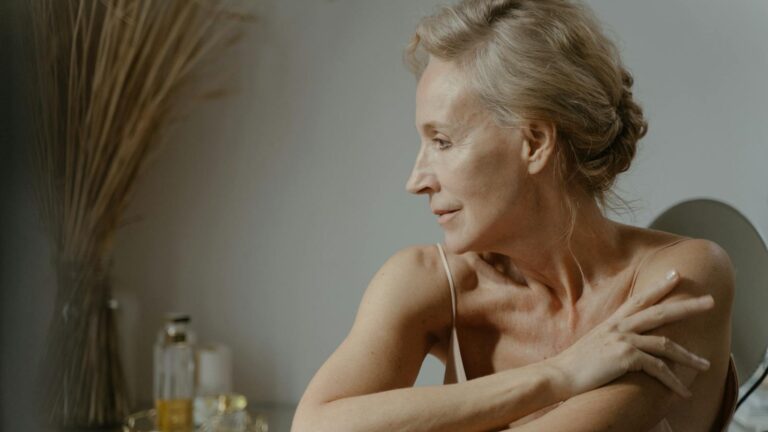
Photo by Pavel Danilyuk
Life After 45: tech‑savvy, active and still under‑seen
Despite the stereotype that “older people don’t understand technology,” we are surprisingly tech‑savvy. Many of us are on social media, using smartphones every day, managing our banking apps, joining video calls, and running entire businesses from our laptops or even our phones. Technology helps us stay in touch with friends and family scattered around the world, keep up with health information, learn new skills and run our lives more smoothly.
We love the latest tools that save time and make life easier: booking the next holiday on our smartphone while having a pedicure, doing an online yoga class in the living room, listening to a podcast about menopause while we walk, managing family calendars in one shared app. Multitasking could almost be our middle name.
We run marathons and swim for miles, we lift weights, we do Pilates and Zumba. We drive lorries and pilot planes, we dance and write code, we work as scientists, artists, carers, CEOs, creatives and everything in between. We love wine, beer and whisky. We go on girls‑only holidays, we go dancing and clubbing, we go climbing and even bungee jumping. We write books and plays, we direct films, we teach, we discover and we influence the people around us—whether or not we are labelled “influencers.”
And yet, even though we are everywhere, we are still often under‑represented or misrepresented in media and marketing. Too often, older women are shown only as frail, invisible or stuck in the past. The reality is that we are loud, busy, ambitious, loving, exhausted, hopeful and very much alive.
Life After 45: style, identity and cultural impact
We are also reshaping what ageing looks like on the outside. We challenge the idea that femininity has an expiry date somewhere around 40. Some of us dye our hair every colour under the sun; others are happily embracing our silverlocks and letting the grey shine through. The key difference is that it’s a choice, not a social obligation. We can wear ripped jeans, red lipstick, trainers or heels, floaty dresses or power suits—whatever feels like “us” at this stage of life.
Many of us are also expressing ourselves through tattoos and piercings; body art is no longer reserved for the young. We get our first tattoo at 50 or 60 to mark a turning point, a loss, a new beginning or simply because we want to. For earlier generations, this would have been almost unthinkable. For us, it’s another way of saying, “This is my body and my story, and I get to decorate it however I like.”
Culturally and economically, we are a powerful force. We’re a growing part of the workforce, we control a significant share of household spending, and we make decisions about travel, housing, food, health and leisure. Yet brands and institutions often still overlook us or talk down to us. The old idea that our lives should shrink to knitting, cooking and looking after the house as our sole identity is gone. Those things can still be beautiful parts of life if we enjoy them—but they are not the whole story anymore.
We have come to stay. We are claiming space in work, culture, politics, sport and digital life. We are starting companies, joining protests, volunteering, mentoring younger women and refusing to disappear quietly. By living fully and visibly now, we’re opening more room and more possibilities for the generations coming after us.
This is what life after 45 looks like from now on!
Disclaimer – This article is for general informational and educational purposes only and is not intended as medical, mental health or other professional advice. Any actions you take based on this content are at your own discretion and responsibility.
References
- Science Direct – Like mother (not) like daughter
- Science Direct – Social Media use Among Older Adults
- AARP – How Women Over 50 Are Driving the Global Longevity Economy
- Bank of America Institute – Women and Wealth – Creating Opportunities