
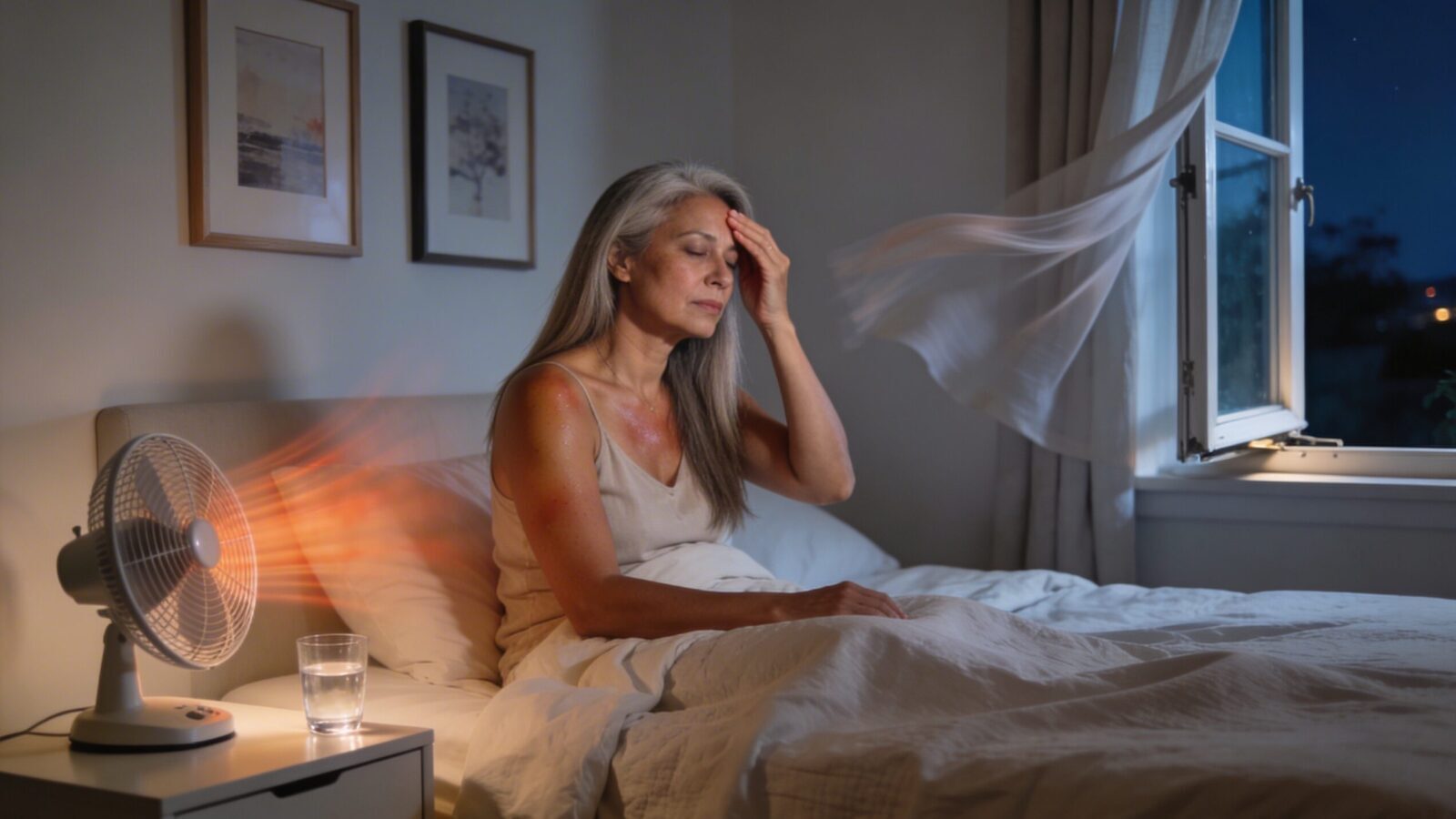
Have you found yourself in a wrestling match with your bedsheets at 2 a.m., sweating, sighing and wondering if restful sleep is just a distant memory? If so, join the club — night‑time hot flushes in menopause have a not‑so‑funny way of turning peaceful nights into sticky, restless ones, with sudden heat, constant tossing and turning, or simply waking up for no clear reason.
Most women over 50 feel like they’re in the same boat, rowing with both hands just to get a decent night’s sleep.
Why does night-time hot flushes in menopause mess with sleep?
Hormonal changes are the big culprit. As our oestrogen and progesterone levels drop during menopause, our body’s thermostat goes on the fritz. Suddenly, you get hot flushes—waves of heat, sweat, and sometimes panic—at random times, often in the middle of the night. Add in stress, aches, and the natural changes our bodies go through, and it’s no surprise over 60% of women report sleep disturbances at this stage. If you are wondering how all these symptoms fit together, Menopause Guide explains the stages, common signs, and when to seek extra support.
Night-time hot flushes in menopause – what sleep disruption looks like
Is this you?
- Waking up soaked thanks to night sweats.
- Tossing off blankets, then pulling them back on.
- Lying awake, heart racing for no real reason.
- Feeling exhausted (and grumpy) during the day.
You’re not just imagining it. Not only do sleep problems impact your mood and focus, but they can also increase the risk for heart disease, diabetes, and memory issues in the long run.
Night-time hot flushes in menopause – simple ways that really help
1. Cool down your bedroom
- Lower the heating or use a fan. Even leaving a window opened a little bit can bring relief.
- Moisture-wicking sheets and pyjamas (think cotton or bamboo) soak up sweat and let skin breathe.
- Layer blankets so you can adjust easily through the night.
- Keep a cold glass of water bedside for instant cool-downs.
2. Bedtime rituals
- Stick with a sleep schedule—go to bed and get up at the same time.
- Dim the lights and avoid screens (TV, phones) at least 60 minutes before bed. Blue light messes with natural melatonin production.
- Read, write in a journal, listen to soft music, or meditate in the evening. The goal is to signal your brain: “It’s time to unwind”.
3. Watch what you eat (and drink!)
- Cut out caffeine after noon (even chocolate).
- Minimise alcohol and spicy foods in the evening—they rise body heat and disrupt hormone balance.
- Eat a light, protein-rich snack before bed—nuts, yogurt, or a small piece of cheese work well.
- Try magnesium-rich foods (dark leafy greens, nuts, avocados, banana, whole grains). Magnesium is key for relaxation and sleep, and most menopausal women are low in it.
4. Move your body every day
Exercise really helps—just do it earlier in the day!
- Get 30-40 minutes of movement: walking, cycling, swimming, or dancing.
- Stretching, tai chi, or yoga before bed can relax muscles and mind.
- Avoid heavy workouts close to bedtime.
5. Practice mindful stress management
Menopause can crank up our anxiety. If your mind races at bedtime, try:
- Meditation, deep breathing, or progressive muscle relaxation exercises.
- Writing down worries in a sleep journal.
- Evening gratitude practices, or reading inspirational stories.
If sleep anxiety lingers, consider Cognitive Behavioural Therapy for Insomnia (CBT-I)—proven to help you retrain your brain for restful sleep.
6. Tame those hot flushes
Hot flushes at night are the worst! You can minimise them:
- Keep track of triggers (foods, stress, activities) with a simple diary.
- Try a cool shower or bath before bed.
- Keep a cooling towel or wet washcloth nearby.
- Herbal supplements like black cohosh, melatonin, and valerian root may help—always check with your doctor first.
7. Supplements and herbal remedies
Some supplements with emerging evidence:
- Magnesium: for relaxation and better sleep.
- Melatonin: before bed improves sleep quality, especially as our natural melatonin declines with age.
- 5-HTP: can boost serotonin and support longer, deeper sleep.
Always speak to your doctor before starting new supplements.
8. Limit napping and night-time disruptions
- Napping late in the day sabotages sleep.
- If you wake up sweating or wired, get up briefly—read, sip water—then return to bed when sleepy.
- Put your phone outside the bedroom to avoid temptation.
Medical solutions
If self-care doesn’t bring enough relief, it’s okay to seek medical help. Talk to your doctor about:
- Hormone Replacement Therapy (HRT): Can reduce hot flushes and sleep disturbances, but carries certain risks. Best for some, not all; always discuss the pros and cons with a medical professional.
- CBT-I (Cognitive Behavioural Therapy for Insomnia): Works wonders for persistent sleep difficulties.
- Professional sleep coaching: Growing in popularity for women in menopause.
Night-Time Hot Flushes in Menopause – what NOT to do
- Don’t power through insomnia.
- Don’t double up on sleep meds—use only as directed, and only under a doctor’s care.
- Don’t ignore persistent sleep issues. Chronic sleep loss can impact your health long-term.
Night-Time Hot Flushes in Menopause – when to see a doctor
Trouble sleeping for more than a few weeks? Find yourself feeling anxious, depressed, or so tired it’s affecting your day? See your doctor, you deserve quality rest.
Putting it all together
Menopause sleep troubles aren’t fair, and they’re definitely not easy—but they are manageable. By creating a calm sleep oasis, making gentle nutrition changes, moving your body, and focusing on self-care rituals, you can get better rest.
Remember, restful sleep isn’t a luxury—it’s a necessity, and with each little habit, you get closer to reclaiming your nights.
Night-Time Hot Flushes in Menopause – sleep checklist
- Keep your bedroom cool and dark.
- Use moisture-wicking bedding and pyjamas.
- Stick to a regular sleep schedule.
- Limit caffeine and alcohol.
- Move every day, but not before bed.
- Practice mindful stress relief.
- Track your triggers.
- Consult your doctor with ongoing troubles.
My experience
I’ve never really suffered from night-time hot flushes in menopause. But during the day? Oh, I certainly have, and let me tell you, that’s no walk in the park either. That said, my nights were hardly peaceful ( I’ve been sleeping better now). I’m a very light sleeper and wake up at the slightest sound, which means I’m up and down several times a night.
Add to that, I’m hypermobile and live with chronic back pain (with shoulders and knees that decide to ache whenever they please), so I toss and turn way too much to have a truly restful night. If you throw in restless leg syndrome and my “unadjustable” body thermostat, I end up covering and uncovering myself dozens of times before morning. The result? Pure tiredness.
And let’s be honest, Silverlockers, no one ever said the big “M” was going to be easy on us! Here’s one thing I can confirm: turning down the heating in the bedroom so it’s nice and cool helps a lot. I stick with basic cotton pyjamas—nothing fancy, just comfortable and loose (always a bigger size for extra comfort).
Wishing you all a good night and the restful sleep.
If you want to share your story, drop a comment below, maybe you have some tricks to help us all!
Disclaimer: This article is for general information and support only. It does not replace personalised advice, diagnosis or treatment from your GP, sleep specialist, menopause specialist, menopause specialist or any other qualified health professional. Never ignore or delay seeking medical advice because of something you have read on Silverlocks.
References
- Sleep Foundation – How can menopause affect sleep
- National Library of Medicine – Menopause and sleep disorders
- Harvard Health Publications – Exposure to blue night at night is harmful to your health