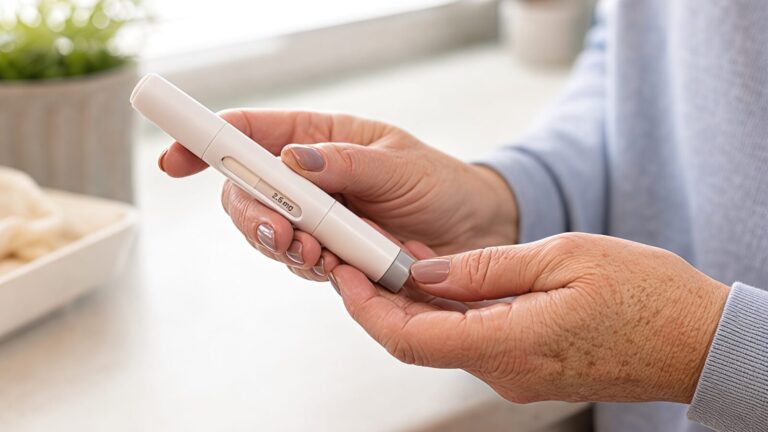

It feels like everyone is talking about Ozempic, Wegovy, Mounjaro and “skinny jabs” at thee moment. These medicines were originally developed for type 2 diabetes, but higher doses are now licensed in many countries for treating obesity.
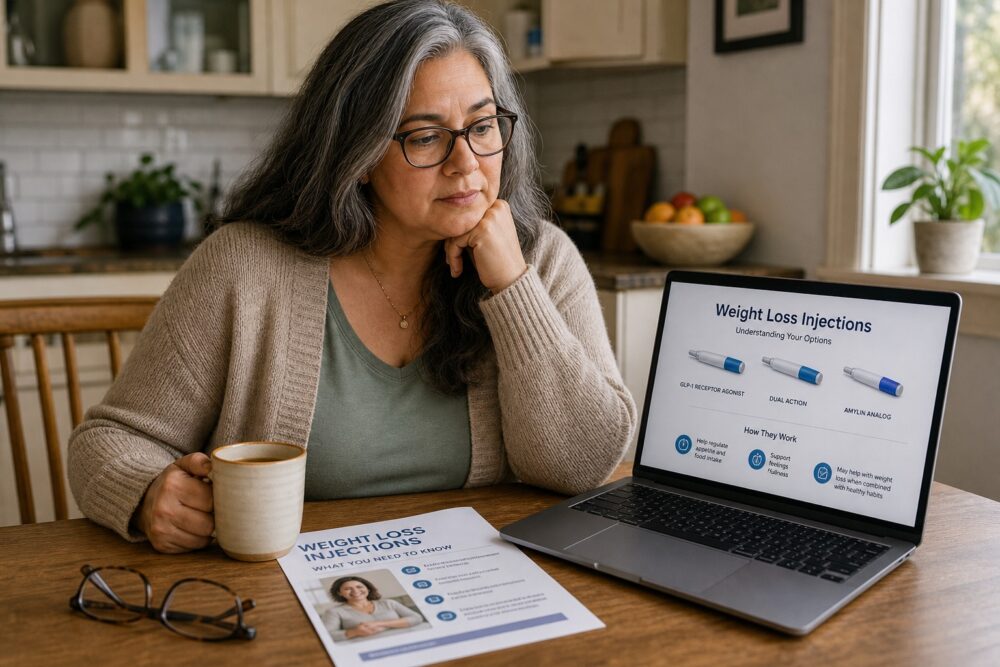
They work mainly by mimicking hormones such as GLP‑1, which help regulate appetite, blood sugar and the speed at which food leaves your stomach.
Are Weight Loss Injections Safe? Used properly and under medical supervision, these injections can help some people lose 10–15% or more of their body weight over time, alongside lifestyle changes.
But they’re powerful medications, not beauty hacks, and they’re definitely not suitable for everyone.
If you’re navigating menopause and curious about weight changes, our main menopause guide about weight loss injections is a good place to start for the bigger picture on hormones, health and safer options.
Are Weight Loss Injections Safe And How Do They Actually Work?
Most of the commonly talked‑about injections (like semaglutide in Wegovy and liraglutide in Saxenda) are GLP‑1 receptor agonists. GLP‑1 is a hormone your gut releases after you eat; it talks to your brain to say, “You’ve had enough now,” and it also helps manage blood sugar.
These medicines:
- Make you feel fuller sooner and for longer, so you naturally eat less.
- Slow stomach emptying, which can reduce blood sugar spikes after meals.
- Improve insulin release and sensitivity, especially in people with type 2 diabetes.
The flip side is that this slowdown in digestion and the hormonal effects can cause side effects like nausea, vomiting, diarrhoea and constipation, particularly in the early weeks. This is why doses are usually increased gradually and monitored by a doctor.
Who can use weight loss injections?
Every country has its own licensing rules, but the general pattern is very similar. In most guidelines, weight loss injections are reserved for people whose weight is already causing, or is likely to cause, significant health problems.
You’re more likely to be eligible if:
- Your BMI is 30 or above (classified as obese).
- Or your BMI is 27 or above and you have weight‑related conditions like high blood pressure, pre‑diabetes or type 2 diabetes, sleep apnoea, or osteoarthritis in weight‑bearing joints.
In the UK, medicines like Wegovy are generally offered through specialist weight management services or carefully regulated private clinics, not as casual one‑off prescriptions. On the NHS, access is typically restricted to people with obesity who also have significant health risks and who will engage with lifestyle support alongside the injections.
If your weight is affecting your mobility, joint pain, blood pressure, blood sugar or sleep, and you’ve already tried lifestyle approaches, your GP or specialist may discuss injections as part of a broader plan.
Who should not use weight loss injections?
This is the part that often gets lost in social media chat. There are clear situations where these medicines should generally be avoided, or only considered with very careful specialist oversight.
You should normally not use weight loss injections if:
- You are pregnant, planning pregnancy, or breastfeeding: GLP‑1 medicines are not recommended because of potential risks to the baby and lack of safety data.
- You have certain kidney or pancreatic conditions: people with impaired kidney function or previous pancreatitis need extreme caution; injections can worsen these issues.
- You have a personal or family history of some endocrine or thyroid cancers (especially medullary thyroid carcinoma) or MEN‑2: these are listed as formal contraindications in many guidelines.
- You are under 18: most weight loss injections are not licensed for children or teens.
- You are already underweight or have a history of eating disorders: using an appetite‑suppressing injection can worsen disordered eating and nutritional deficiencies.
People with severe gastrointestinal disease, severe depression or other complex conditions may still be eligible, but they need personalised assessment. This is why a thorough medical history and discussion of your current medicines is essential.
The big safety question: are they safe?
The nuance here is that licensed, prescription weight loss injections can be reasonably safe when used for the right person, at the right dose, with proper monitoring. That doesn’t make them risk‑free, and it certainly doesn’t mean they’re safe in all the ways they’re being used right now.
Common side effects
Across studies and real‑world use, people most often report:
- Nausea and vomiting
- Diarrhoea or constipation
- Abdominal pain or bloating
- Headaches
- Fatigue and dizziness
These are usually worst when starting treatment or when the dose is increased, and they often improve with time. Doctors may adjust doses or suggest practical strategies, such as smaller meals or avoiding high‑fat foods, to make the transition easier.
More serious risks
There are also potential serious complications, which are thankfully less common but still important to know:
- Pancreatitis (inflammation of the pancreas).
- Gallstones and gallbladder inflammation.
- Significant, persistent vomiting leading to dehydration.
- Possible very slow stomach emptying, which in rare cases can seriously affect digestion.
Because these injections also affect blood sugar, people with diabetes may need changes to their other diabetes medicines to avoid hypoglycaemia.
All of this underlines the need for ongoing medical follow‑up rather than a “fire‑and‑forget” jab.
Approved prescriptions vs “cheap online jabs”
One of the most worrying trends is the rise of unregulated or compounded weight loss injections sold online at bargain prices. These products often claim to be semaglutide or similar, but they are not licensed medicines, and you cannot be certain what’s in the vial or how accurate the dose is.
Regulators such as the US FDA have warned about people experiencing serious adverse effects from these unapproved injections, particularly due to dosing errors. Reports include severe vomiting, fainting, headaches, pancreatitis and gallstones, sometimes requiring hospital care.
The key difference is:
- Approved medicines like Wegovy or Mounjaro have gone through rigorous trials, quality checks and ongoing safety monitoring.
- Unapproved “copycat” or compounded versions have not, and their ingredients, strength and safety data may be unclear or unreliable.
In short: if an injectable is only available via a website that doesn’t ask for full medical details or a prescription, it’s a red flag, not a shortcut.
Are weight loss injections right for menopausal women?
Midlife is exactly when many of us notice weight creeping up around the middle, even when our habits haven’t really changed. Hormonal shifts, sleep disruption, stress, joint pain and caring responsibilities can all play a role, so it’s no wonder the promise of a simple injection is incredibly tempting.
For women in perimenopause and postmenopause who meet the medical criteria for obesity and have weight‑related health problems (for example, high blood pressure, sleep apnoea or type 2 diabetes), injections may be one option to consider alongside other treatments. Some studies suggest that significant weight loss in this group can improve blood pressure, blood sugar control and joint pain, as well as reduce long‑term cardiovascular risk.
However, midlife is also a time when other health conditions are more likely to show up, so careful screening is even more important. You and your doctor need to look at the whole picture – heart health, bone density, mood, thyroid function, any history of cancer, your relationship with food – before deciding whether an injection is genuinely the best next step.
Who might benefit
It can help to think in broad groups rather than rigid rules. Based on current guidance and expert commentary, people who might benefit include:
- Adults with obesity (BMI ≥30) whose weight is already damaging their health – for example, type 2 diabetes, severe sleep apnoea, heart disease risk, or major mobility issues.
- Adults with BMI ≥27 plus weight‑related conditions, who’ve already tried and struggled with structured lifestyle programmes.
- Some people preparing for bariatric surgery, where injections are used as a “bridge” to reduce surgical risk and help early weight loss.
Even in these groups, injections are meant to sit alongside nutrition, movement, sleep and stress support, not replace them. Studies consistently show that when people stop the medication but don’t keep up lifestyle changes, weight is likely to creep back.
When to pause and say “actually, no”
There are also situations where, medically speaking, injections are unlikely to be the best option, even if they’re technically possible.
You may want to think twice if:
- Your main motivation is aesthetic (“I just want to be beach‑ready in six weeks”) rather than health. Rapid, medically‑driven weight loss for purely cosmetic reasons increases the risk of disappointment and rebound gain.
- You’re not ready for the ongoing commitment of injections, follow‑up appointments, potential side effects and lifestyle changes. These medicines are usually used for many months or years, not as a two‑week fix.
- Your relationship with food is already fragile – for example, you’ve had periods of restriction, bingeing, or intense fear of weight gain. In these situations, psychological support often needs to come first.
If your weight is only slightly above the “healthy” BMI range and you don’t have weight‑related health problems, most guidelines would steer you towards lifestyle strategies rather than prescriptions.
Building a safer plan with your Doctor
If you’re curious about whether injections are appropriate for you, a good starting point is an honest, practical chat with your doctor or a specialist weight management clinic. In the UK, that conversation usually covers:
- Your weight history, BMI and waist measurement.
- Any existing conditions – for example, diabetes, high blood pressure, sleep apnoea, arthritis, PCOS.
- Your medications and supplements, including HRT, thyroid medicines, antidepressants and diabetes drugs.
- Your previous experiences with lifestyle changes – what you’ve already tried, what worked for a while, and what felt impossible.
From there, you can look at a menu of options: structured lifestyle programme, group support, digital tools, psychological support, medicines (tablets or injections), and, sometimes, surgical routes. The key is that the injection is one tool among many, not the whole toolkit.
Red flags to watch out for
If you do decide to explore weight loss injections, keep your antenna up for warning signs.
Be cautious if:
- A website offers “weight loss jabs” without asking for any medical history or a prescription.
- The product does not clearly state which licensed medicine it contains, or it’s described as a “compounded” version without regulator approval.
- You’re promised huge, effortless losses with “no side effects” – that’s not how real‑world medicines work.
- You’re encouraged to use injections alongside extreme diets or detoxes that could worsen side effects and nutrient deficiencies.
On the flip side, green flags include: being offered a proper consultation, full information about the licensed medicine, realistic expectations, and ongoing follow‑up with a healthcare professional.
If injections aren’t for you (or you decide to say no)
Even if you’re not a good candidate for weight loss injections, or you simply don’t fancy them, you’re absolutely not left with “nothing”. For midlife women, especially during and after menopause, the basics still make a huge difference over time:
- Gentle, regular movement (walking, swimming, resistance exercises that protect bone and muscle).
- Paying attention to protein, fibre, and healthy fats to support fullness and blood sugar balance.
- Prioritising sleep, stress management and social connection – all of which influence appetite and weight regulation.
Where needed, you can also explore psychological support for emotional eating, and medical support for conditions like thyroid disease, PCOS or depression that may influence weight. None of this is as dramatic as watching the scales drop week by week on an injection, but it is often more sustainable.
References
- British Heart Foundation – Weight‑loss injections explained
- Patient.info – What are weight loss injections and are they safe?
- National Institute of Diabetes, Digestive and Kidney Diseases – Overweight and Obesity Statistics
- NCBI Bookshelf – GLP‑1 agonists: adverse effects and contraindications
- U.S. FDA – GLP‑1 medicines for chronic weight management
Disclaimer – This article is for general information and education only. It is not a substitute for professional medical advice, diagnosis or treatment. Weight loss injections and other medicines should only be started, changed or stopped in consultation with a qualified healthcare provider who knows your medical history. Never ignore or delay seeking medical advice because of something you read online.