Have you noticed that your arms feel a little less toned, your legs tire more quickly, or that getting up off the sofa takes just a bit more effort than it used to? Muscle loss during menopause is one of the most common, and most undertalked, changes that happen during the hormonal transition that affects every woman. The good news? Once you understand why it’s happening, you’re in a much better position to do something about it.
This guide will walk you through exactly what happens to your muscles during perimenopause, menopause, and beyond, why oestrogen is the key player, and — most importantly — all the practical, evidence-backed things you can do every single day to protect your strength and feel like yourself again. It’s part of our complete guide to menopause symptoms and how to manage them — your go-to resource for navigating this transition with confidence.
What Is Muscle Loss — and Why Does It Start Before Menopause?
The medical term for age-related muscle loss is sarcopenia. It refers to both the loss of muscle mass and a decline in muscle strength and function — meaning it’s not just about how your muscles look, but how well they work. According to the Office on Women’s Health (USA), the body naturally starts losing 3–5% of its muscle mass each decade from around age 30. You might not notice much in your thirties, but that quiet, gradual loss starts to become much more obvious around your fifties — and menopause is a big reason why.
Research published in PMC / NIH (2026) confirms that the rise in sarcopenia in women directly coincides with the onset of menopause, driven largely by the hormonal changes that occur during this transition. Postmenopausal women are significantly more likely to have sarcopenia than perimenopausal women — and that gap widens the further past menopause you go.
The Oestrogen-Muscle Connection: Why Your Hormones Matter So Much
Oestrogen is far more than a reproductive hormone — it’s a key guardian of your muscles. It supports muscle repair, keeps muscle stem cells (called satellite cells) healthy and active, and helps reduce the chronic inflammation that accelerates muscle breakdown. When oestrogen starts to fall, all of these protective effects begin to fade.
Research from the University of Minnesota, published in the journal Cell Reports, found that without adequate oestrogen stimulation, the number of muscle stem cells dropped by a staggering 30% to 60%. These satellite cells are responsible for generating new muscle tissue after everyday wear and tear. Without them doing their job properly, muscles can’t repair or rebuild as efficiently — and strength declines as a result.
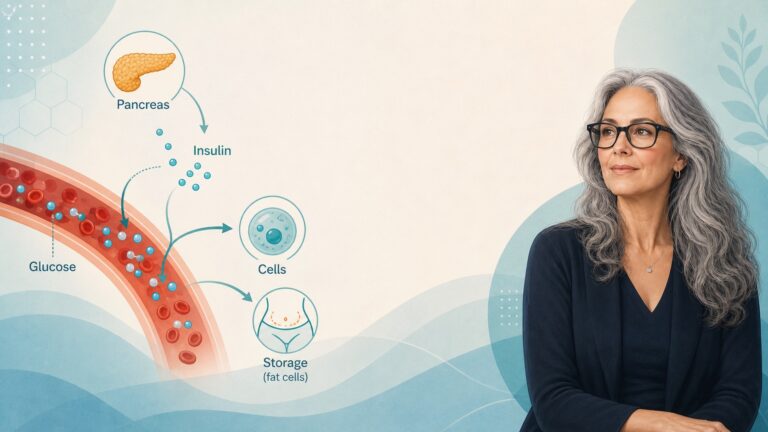
A comprehensive review in Frontiers in Endocrinology further explains that oestradiol (the main form of oestrogen) regulates protein synthesis in muscle tissue, helps maintain insulin sensitivity, and protects against oxidative stress — all of which are essential for keeping muscles robust and functional. When oestradiol drops, all three of these protective pathways are compromised simultaneously.
What Happens at Each Stage: Perimenopause, Menopause and Beyond
During Perimenopause
Perimenopause can begin up to a decade before your final period. During this phase, progesterone is typically the first hormone to dip, followed by a decline in oestrogen. You may notice your recovery after exercise takes longer, your muscles feel achier for no obvious reason, or you seem to be losing tone despite no change in your routine. These early signs — stiffness, fatigue, and reduced muscle strength — are directly linked to the hormonal fluctuations that characterise this transition period.
During Menopause
Once you’re officially in menopause (defined as 12 consecutive months without a period), oestrogen levels are falling more dramatically. The musculoskeletal syndrome of menopause, as researchers now call it, encompasses muscle loss, joint discomfort, reduced bone density, and changes in body composition — all driven largely by declining ovarian hormone production. You may find that weight shifts towards your abdomen, that previously easy physical tasks feel harder, or that your joints feel less cushioned.
After Menopause (Postmenopause)
In postmenopause, oestrogen and progesterone settle at consistently low levels. A study published in PMC/NIH on middle-aged women found that muscle and bone loss continue during postmenopause, reinforcing the importance of ongoing active management. The silver lining — and this is important — is that it is never too late to begin. Research consistently shows that postmenopausal women can rebuild muscle and strength with the right exercise and nutrition approach.
What Does Muscle Loss Actually Feel Like Day to Day?
Muscle loss during menopause isn’t always dramatic — it tends to creep up on you. Here are the signs many women describe:
- Unexplained fatigue — muscles tire more quickly during activities you used to find easy
- Achy, stiff muscles even without having exercised — a classic sign of reduced oestrogen’s anti-inflammatory effect
- Feeling less steady on your feet, reduced balance, or a sense that your movements are less fluid
- Loss of muscle definition — arms, legs, and core begin to look and feel softer
- Increased belly fat — as muscle mass falls, body fat tends to redistribute to the abdominal area
- Difficulty with everyday tasks such as opening jars, carrying bags, or rising from a low chair
The Office on Women’s Health notes that declining hormone levels also affect how muscles use energy for daily activities, contributing to this pervasive sense of reduced physical capacity. If this sounds familiar, please know: it is not your fault, and it is very much manageable.
What to Eat: Fuelling Your Muscles Through Menopause
Prioritise Protein — More Than You Think You Need
Protein is the building block of muscle, and during menopause your body becomes less efficient at using dietary protein for muscle maintenance — a phenomenon called anabolic resistance. Adults generally need around 0.75 g of protein per kilogram of body weight per day, but older and menopausal women benefit significantly from 1.0 to 1.2 g per kilogram per day, ideally spread across meals with 20–30 g of protein at each sitting. Sports nutrition specialist Dr Stacy Sims recommends aiming even higher — at the upper range of 2.2–2.4 g/kg for active peri- and postmenopausal women.
Great protein sources to build your meals around include:
- Animal proteins: eggs, Greek yoghurt, cottage cheese, chicken, turkey, salmon, sardines, lean beef, and tuna
- Plant proteins: tofu and tempeh (which also provide mild phytoestrogens), edamame, lentils, chickpeas, black beans, quinoa, hemp seeds, and pumpkin seeds
- Dairy: high-protein yoghurts and cottage cheese also deliver calcium for bone health
Eat More Oily Fish
Salmon, mackerel, sardines, and trout are worth eating at least twice a week. They deliver both high-quality protein and omega-3 fatty acids, which help combat the chronic inflammation that accelerates muscle breakdown in postmenopausal women.
Don’t Forget Anti-Inflammatory Foods
Chronic low-grade inflammation is a major driver of sarcopenia. Load your plate with colourful vegetables, leafy greens, berries, nuts, and olive oil. These foods are rich in antioxidants that help counteract oxidative stress — one of the key mechanisms through which muscle fibres degrade after menopause.
Vitamins, Supplements and Natural Approaches
A food-first approach is always the foundation, but targeted supplementation can genuinely plug gaps. Here’s what the evidence says:
Vitamin D3 with Vitamin K2
Vitamin D plays a crucial role in bone health, immune function, and muscle function. Many women in the UK are deficient, especially during autumn and winter. The NHS recommends at least 400 IU (10 mcg) daily, though many specialists suggest higher doses based on blood test results. Vitamin K2 should be taken alongside D3 to support calcium metabolism — directing calcium into bones rather than arteries. If you’re on warfarin, always speak to your GP before taking vitamin K supplements.
Magnesium
Magnesium is involved in over 300 processes in the body, including muscle contraction, nerve function, and sleep quality. Many women don’t get enough from food alone. According to Mediclinic, magnesium bisglycinate at 200–400 mg, taken 60–90 minutes before bed, is particularly helpful for sleep and muscle cramp relief. Avoid taking too much — high doses can cause digestive upset.
Creatine
Once thought of as a supplement purely for athletes and bodybuilders, creatine is now generating serious interest for menopausal women. It acts as a quick-energy backup for muscles, and evidence from controlled trials suggests it can help preserve muscle mass, support bone health, and may even benefit cognitive function and mood — with best results when combined with resistance training. Creatine monohydrate is the most well-studied form. Always take it with plenty of water, and if you have kidney disease, discuss with your doctor first.
Omega-3 Fatty Acids
If oily fish twice a week isn’t realistic for you, a quality fish oil supplement (targeting 1,000–2,000 mg of combined EPA and DHA daily) can support heart health, joint comfort, brain function, and inflammation control. It’s a straightforward addition to your routine.
Collagen Peptides
Hydrolysed collagen may offer modest benefits for skin elasticity, joint comfort, and connective tissue support. It is not a replacement for adequate dietary protein or resistance training, but it can be a useful addition, particularly if you experience joint discomfort alongside muscle changes.
Phytoestrogens: Soy Isoflavones
Phytoestrogens are naturally occurring plant compounds that weakly mimic oestrogen in the body. Soy isoflavones are the most studied and are found in tofu, tempeh, edamame, and soy milk. A systematic review in PubMed found that isoflavones at 20–80 mg/day may be protective against muscular fatigue and support bone health, though they appear to work best as part of a broader dietary and exercise strategy rather than as a standalone intervention.
Ashwagandha (Withania somnifera)
This traditional Ayurvedic herb is gaining recognition in women’s health circles. A 2025 study in PMC investigated ashwagandha and its effects on menopausal symptoms, including vascular function. It has adaptogenic properties that may help manage stress-driven cortisol, which — when chronically elevated — accelerates muscle breakdown. It’s worth exploring with your healthcare provider as a complementary option.
B-Complex Vitamins
B vitamins, especially B12, support energy metabolism and nerve health — both of which affect how well your muscles function. Women eating plant-based diets are particularly at risk of B12 deficiency and should supplement regularly.
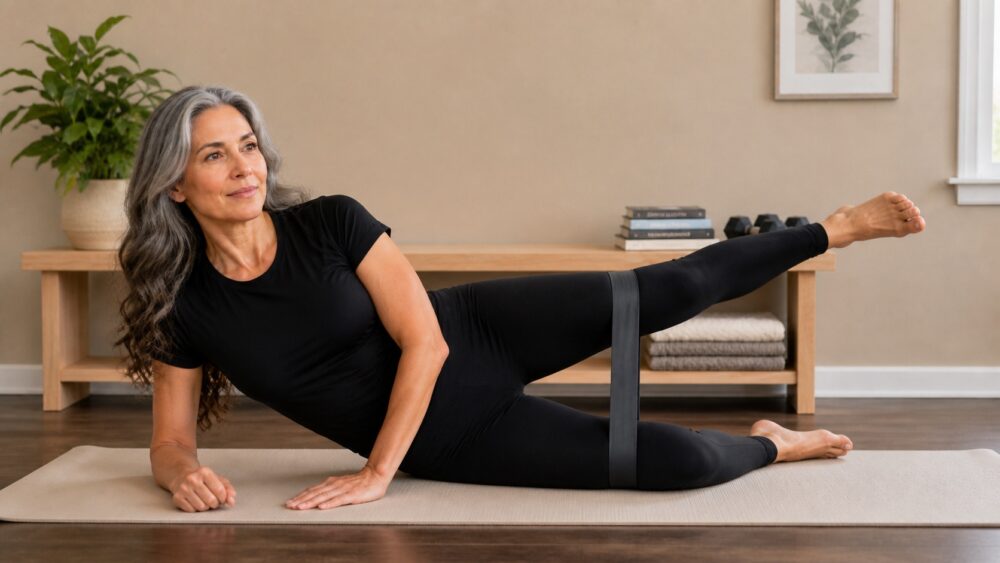
The Single Most Powerful Thing You Can Do: Move With Intention
Resistance Training Is Essential
If there is one thing the research agrees on completely, it’s this: resistance training is the most effective intervention for combating muscle loss during and after menopause. A major study by the University of Exeter, published in Medicine & Science in Sports & Exercise, found that a 12-week low-impact resistance training programme produced a 19% increase in hip strength and lower body function, a 21% increase in full-body flexibility, and a 10% increase in dynamic balance — in women across the entire menopause transition. Crucially, benefits were comparable in pre-, peri-, and postmenopausal women — meaning it’s never too late to start.
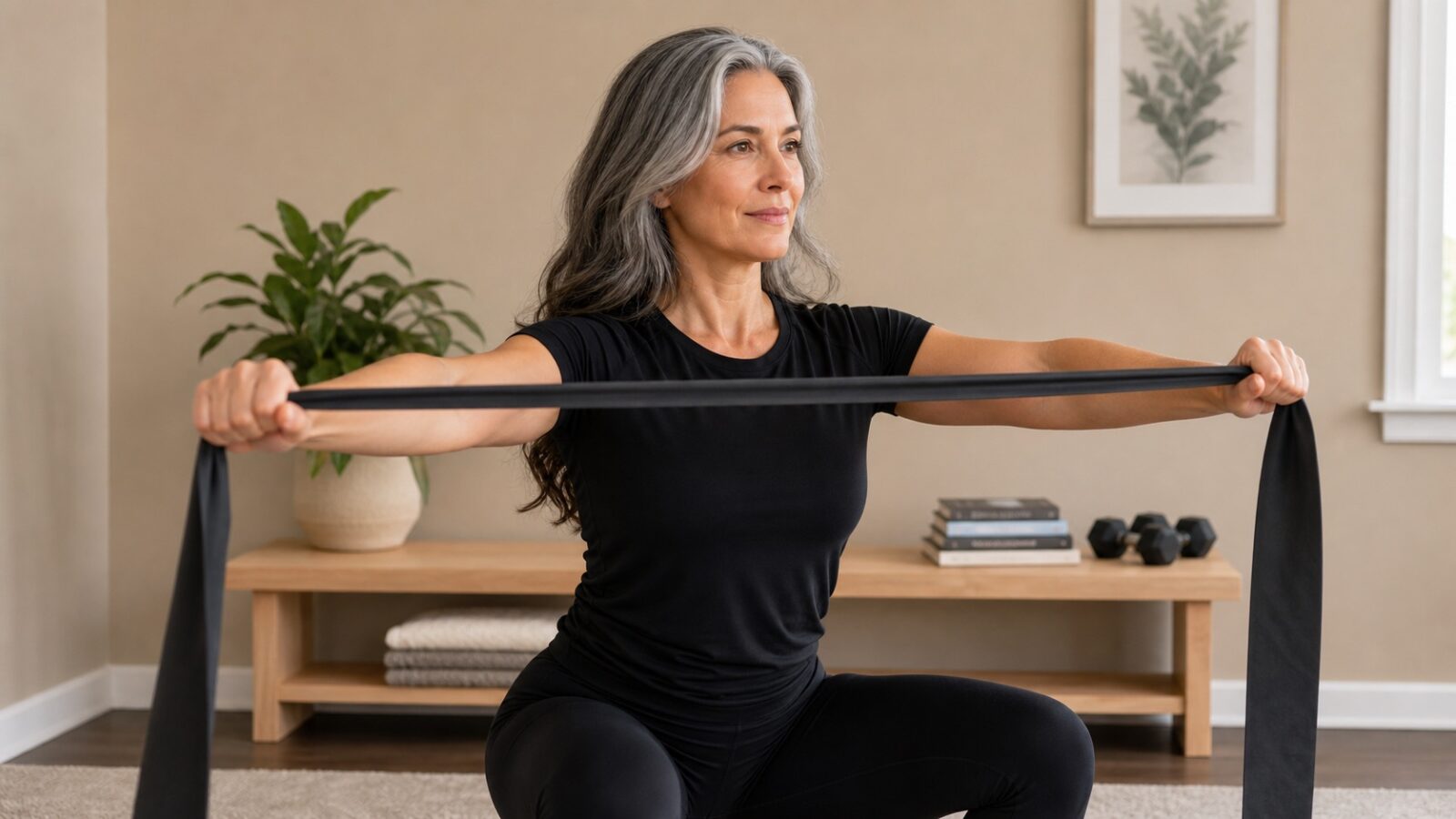
Aim for at least two resistance training sessions per week. You don’t need a gym — resistance bands, ankle weights, dumbbells, or even bodyweight exercises (squats, lunges, press-ups, planks) all count. Start with what you can manage and progressively challenge yourself as your strength builds.
Don’t Neglect Cardiovascular Exercise
Cardio won’t build muscle in the same way, but it keeps your heart healthy, supports metabolism, and contributes to overall wellbeing. The American College of Sports Medicine recommends combining two or more strength sessions per week with either 75 minutes of vigorous aerobic activity or 150 minutes of moderate activity (like brisk walking, cycling, or swimming). Swimming, which many women enjoy, is particularly kind on joints while also keeping you moving.
Walk More, Sit Less
Every bit of movement counts. Research published in PMC/NIH confirms that sedentary behaviour accelerates oestrogen-deficiency-induced sarcopenia, while even moderate increases in daily activity can meaningfully slow that process. If you’re desk-based, set a reminder to stand up, stretch, and move every 45–60 minutes.
The Role of Hydration: More Important Than You Realise
Water doesn’t just quench your thirst — it’s fundamental to muscle contraction, nutrient transport, and recovery. Here’s something many women don’t realise: oestrogen decline affects your body’s ability to regulate fluid balance. After menopause, you may hold less water in your cells (where it matters most for muscle performance), and your thirst signals can become blunted — meaning you may be dehydrated without feeling particularly thirsty.
Even a 2% drop in body water can meaningfully impair muscle strength, power, and endurance. For women going through menopause, general guidelines suggest aiming for 2.0–2.7 litres of fluid per day (from both food and drinks), with more needed in hot weather or during exercise. Practical tips:
- Drink a large glass of water first thing in the morning — before coffee
- Don’t wait until you’re thirsty, especially after menopause
- Add electrolytes (sodium, potassium) if you’re exercising for more than 45 minutes or sweating heavily
- Watch for signs: energy dips, brain fog, muscle cramps, and dark urine are all hydration red flags
- Herbal teas, broth, and water-rich foods (cucumber, berries, watermelon) all contribute to your daily intake
Sleep, Stress, and the Bigger Picture
Muscle repair happens primarily during deep sleep. If menopause symptoms (hot flushes, night sweats, anxiety) are disrupting your sleep, muscle recovery suffers too. Addressing sleep quality — through good sleep hygiene, magnesium supplementation, or speaking with your GP about HRT if symptoms are severe — directly supports your muscles. Equally, chronic stress elevates cortisol, which is catabolic — meaning it actively breaks down muscle tissue. Mind-body practices like yoga, walking in nature, and even social dancing (which, incidentally, is also great for balance and coordination!) can all help keep cortisol in check.
Your Action Plan: Small Steps, Big Difference
The great news is that none of these changes need to be overwhelming. Here’s a simple, practical framework you can start today:
- Eat protein at every meal — aim for 20–30 g per sitting, from a variety of quality sources
- Strength train twice a week minimum — start with bodyweight or resistance bands if weights feel daunting
- Get your vitamin D levels checked — and supplement if needed, with K2 alongside
- Add magnesium to your evening routine — great for sleep and muscle recovery
- Stay hydrated — proactively, not reactively
- Include oily fish twice a week, or take an omega-3 supplement
- Consider creatine monohydrate — 3–5 g daily, especially if you’re strength training
- Move every day — even a 20-minute walk counts and adds up
- Prioritise sleep — your muscles rebuild overnight
- Talk to your GP — if symptoms are significantly affecting your quality of life, HRT, screening for sarcopenia, or a referral to a physiotherapist could all be worth exploring
Remember: your body is not working against you. It’s adapting to a major hormonal shift — and with the right support, it can adapt in a way that keeps you strong, capable, and full of energy for decades to come. You’ve absolutely got this.
References
- Menopause, Female Sex Hormones, Skeletal Muscle Mass — PMC/NIH (2026)
- Low Oestrogen Causes Muscle Loss in Women After Menopause — News-Medical / University of Minnesota (2019)
- Sarcopenia and Menopause: The Role of Estradiol — Frontiers in Endocrinology (2021)
- Muscle and Bone Mass in Middle-Aged Women — PMC/NIH (2020)
- Resistance Training Alters Body Composition in Middle-Aged Women — PMC/NIH (2023)
- Should Women Be Taking Creatine Supplements? — Mediclinic (2026)
Disclaimer – The information on this page is for general educational purposes only and is not a substitute for professional medical advice, diagnosis, or treatment. Always consult your doctor before starting, changing, or stopping any exercise program, especially during perimenopause and menopause. Never start, stop, or change any medication or treatment plan because of something you have read on Silverlocks; always discuss any changes with your healthcare professional first.