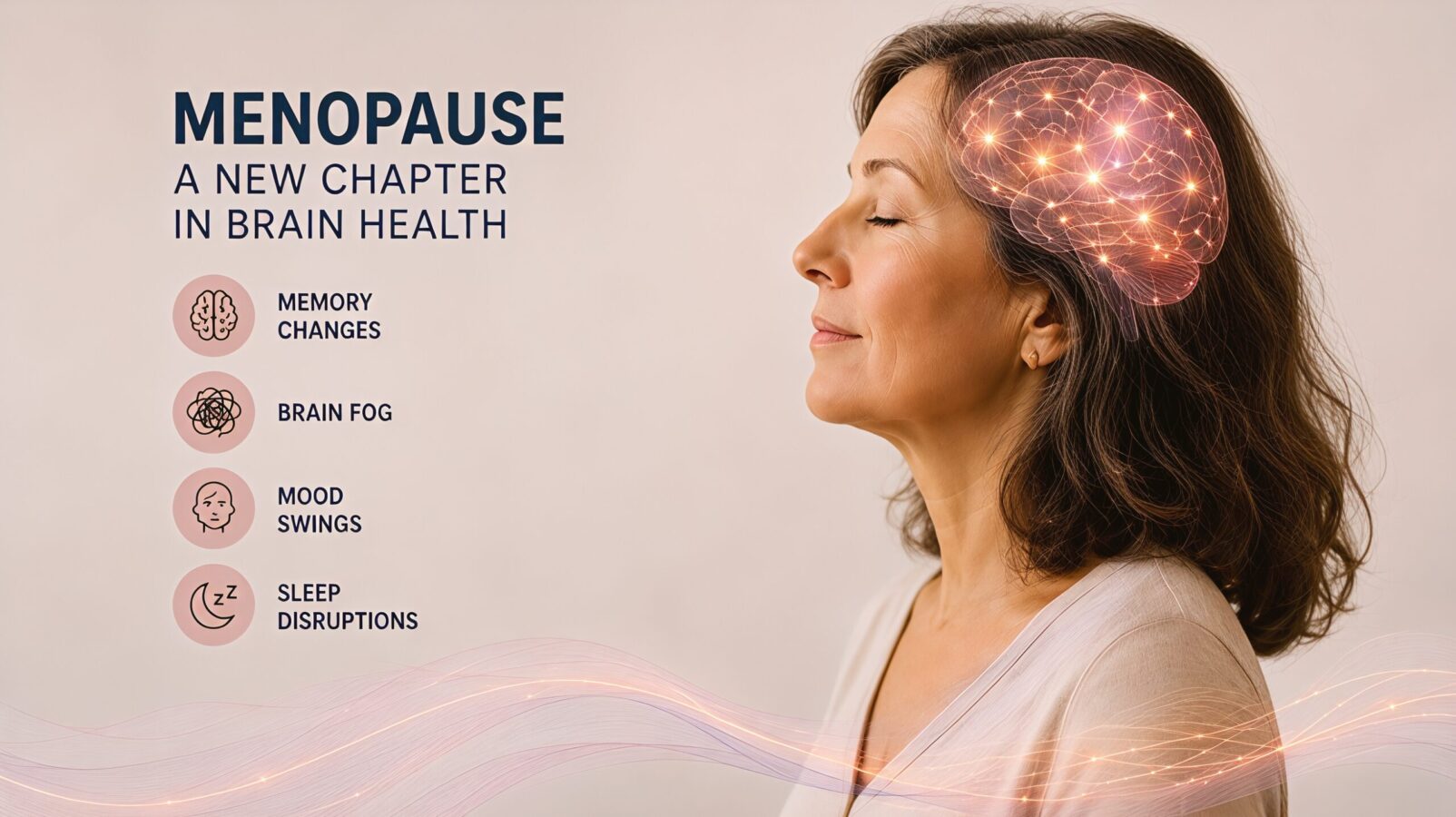
A major new study has confirmed what millions of women have suspected for years: menopause doesn’t just affect your body — it physically changes your brain. Understanding how menopause changes your brain is no longer just a matter of curiosity; it’s backed by hard science, with measurable differences in brain structure visible on MRI scans, in regions directly linked to memory and emotional regulation. If you’ve ever walked into a room and completely forgotten why, or struggled to retrieve a word that’s always been right there, this article is for you. Because science is finally catching up with women’s lived experience — and it’s part of a much bigger picture of what happens during menopause.
We’ve already covered the day-to-day experience of brain fog during menopause and how to manage it here on Silverlocks. This article goes deeper — into the actual neuroscience of what’s happening inside your brain during and after menopause, what the latest research tells us, and what you can do to actively protect your brain health for the long term.
The Study That Changed Everything: 125,000 Women, One Groundbreaking Finding
In January 2026, researchers at the University of Cambridge published a landmark study in the journal Psychological Medicine, using data from almost 125,000 women in the UK Biobank — one of the largest health databases in the world. The findings were significant enough to make headlines internationally, and they deserve a proper explanation.
The research team, led by Dr Katharina Zühlsdorff and Professor Barbara Sahakian from the Department of Psychiatry, compared three groups of women: those who were pre-menopausal, those who were post-menopausal and had never used HRT, and those who were post-menopausal and had used HRT. Around 11,000 of the participants also had brain MRI scans, giving the researchers a direct look at brain structure.
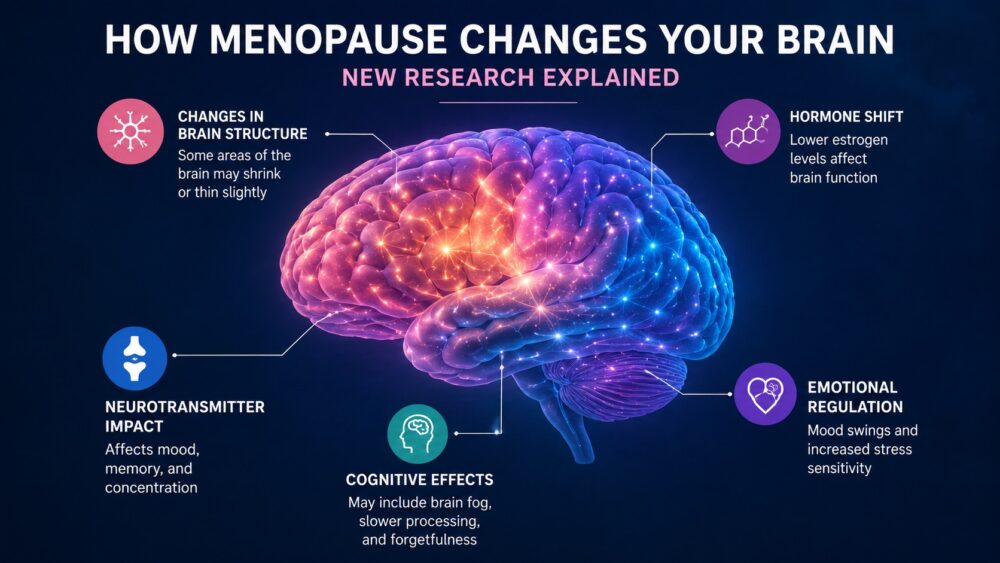
What they found was striking: post-menopausal women had measurable reductions in grey matter volume in key areas of the brain — and this was true regardless of whether they had used HRT or not.
How Menopause Changes Your Brain and Why Does It Matter?
Grey matter is the brain tissue that contains your nerve cell bodies. Think of it as the brain’s processing centres: it’s responsible for how you think, form memories, regulate your emotions, and make decisions. The more of it you have, and the healthier it is, the sharper and more emotionally balanced you tend to be.
The specific regions affected in the Cambridge study are particularly important:
- The hippocampus — your brain’s memory hub, responsible for forming and storing new memories. This is also one of the first areas affected in Alzheimer’s disease.
- The entorhinal cortex — described by the researchers as the brain’s “gateway,” passing information between the hippocampus and the rest of the brain. When this area shrinks, information processing slows.
- The anterior cingulate cortex — the part of your brain that helps you manage emotions, make decisions, and sustain focus and attention.
Put those three together and you have a very clear neurological explanation for how menopause changes your brain making you feel forgetful, emotionally volatile, indecisive, and mentally sluggish — all at once.
Did HRT Make a Difference to Brain Structure?
Here’s where the results get nuanced — and honest. The Cambridge study found that HRT did not reverse the grey matter changes in post-menopausal women. Both the HRT group and the non-HRT group showed similar reductions in grey matter volume compared with pre-menopausal women. However, there was an important difference: post-menopausal women who were not on HRT had slower reaction times than both the pre-menopausal group and the HRT group. This suggests that while HRT may not undo structural changes, it may help slow the functional cognitive decline — keeping the brain working faster and more efficiently even as those structural changes occur.
Dr Zühlsdorff described it this way: think of being asked a question at a pub quiz. You might still arrive at the correct answer — your knowledge is still there — but younger people would get there faster. Menopause appears to accelerate that slowing, while HRT appears to put the brakes on it somewhat. That’s a meaningful distinction, even if it isn’t the whole solution.
Why Oestrogen Is So Important for Your Brain
Oestrogen isn’t just a reproductive hormone. It’s a full-body guardian — and your brain is one of its most important territories. Research published in PMC/NIH confirms that oestrogen receptors are found throughout the brain — not just in reproductive areas, but in the hippocampus, prefrontal cortex, and other regions critical for cognition and emotional regulation. These receptors are there for a reason.
Oestrogen supports the brain in several powerful ways:
- Neuroprotection: it reduces inflammation and oxidative stress in brain tissue, protecting nerve cells from damage
- Neurotransmitter support: it helps regulate serotonin, dopamine, and acetylcholine — the chemicals involved in mood, motivation, memory, and focus
- Synaptic plasticity: it supports the brain’s ability to form new connections, which underpins learning and memory
- Mitochondrial function: it keeps brain cells’ energy supply working efficiently — directly relevant to mental fatigue
- Cerebrovascular health: it helps maintain healthy blood flow to the brain, which is essential for cognitive performance
When oestrogen declines during perimenopause and drops dramatically at menopause, all of these protective mechanisms are simultaneously weakened. A 2025 review in Frontiers in Molecular Biosciences calls the menopause transition a “hormonally modulated early risk state” for cognitive decline — not inevitable decline, but an increased vulnerability.
The Dementia Question: What You Actually Need to Know
Professor Sahakian, the senior author of the Cambridge study, made a statement that deserves to be taken seriously rather than dismissed:
“The brain regions where we saw these differences are ones that tend to be affected by Alzheimer’s disease. Menopause could make these women vulnerable further down the line. While not the whole story, it may help explain why we see almost twice as many cases of dementia in women than in men.”
That is not a reason to panic. It is a reason to understand and act. Women currently represent approximately two-thirds of all dementia cases — and longevity alone doesn’t fully explain the gap. A meta-analysis of 51 studies involving over six million women, published in Frontiers in Aging Neuroscience, found that women who began oestrogen-based hormone therapy in midlife — within ten years of their final period — had up to a 32% lower rate of dementia compared with those who didn’t. Crucially, that protective effect was largely absent in women who started HRT much later in life, pointing to what researchers call the “critical window hypothesis”: oestrogen may need to be present during the early transition to protect the brain most effectively.
It’s also worth noting that the picture around HRT and dementia is genuinely complex. A large Danish study and a UK study using QResearch and CPRD databases have produced mixed results depending on the type of HRT, duration of use, and when it was started. The Conversation has published an accessible summary of this complexity. The honest conclusion from current evidence is: if you’re considering HRT, discuss the timing and type with a menopause-aware GP, as early use appears most beneficial for brain health.
How Menopause Changes Your Brain And What You Can Do To Protect It
The Cambridge researchers were clear on one point: “A healthy lifestyle — exercising, keeping active and eating a healthy diet — is particularly important during this period to help mitigate some of its effects.” Each one targets a specific mechanism of brain protection. Here’s what the neuroscience supports:
Move Your Body — Especially for Neurogenesis
Exercise isn’t just good for your muscles and heart — it actively stimulates the growth of new brain cells, a process called neurogenesis, primarily in the hippocampus — the very region the Cambridge study found shrinks during menopause. Aerobic exercise in particular (brisk walking, swimming, cycling, dancing) increases levels of BDNF (brain-derived neurotrophic factor), essentially a fertiliser for brain cells. Aim for at least 150 minutes of moderate aerobic activity per week, and include two sessions of resistance training — which, as we explored in our muscle loss during menopause article, has benefits that extend well beyond the muscles.
Eat for Your Brain: The Mediterranean Approach
The Mediterranean diet is one of the most consistently evidence-backed dietary patterns for brain health and dementia prevention. It’s rich in oily fish (salmon, sardines, mackerel), olive oil, leafy greens, colourful vegetables, nuts, seeds, legumes, and whole grains — with limited red meat and processed foods. The key brain-protective elements are omega-3 fatty acids (which support myelin, the insulation around nerve fibres), polyphenols (powerful antioxidants that reduce neuroinflammation), and B vitamins (especially B12 and folate, which regulate homocysteine — high levels of which are linked to brain shrinkage and cognitive decline).
Omega-3s: Your Brain’s Best Friend in a Supplement
If oily fish twice a week isn’t consistently on your plate, a quality fish oil supplement providing 1,000–2,000 mg of combined EPA and DHA daily is a straightforward way to support brain cell membrane health. DHA in particular is a structural component of brain tissue — your brain is around 60% fat, and DHA makes up a significant portion of that. Keeping your intake high during the menopause transition is a form of proactive brain maintenance.
Prioritise Deep, Consistent Sleep
Sleep is when your brain does its housekeeping — literally. During deep sleep, the glymphatic system (the brain’s waste-clearance network) flushes out metabolic by-products, including amyloid beta — the protein that accumulates in Alzheimer’s disease. Chronic sleep disruption, which is common during perimenopause and menopause, interrupts this process. This isn’t just about feeling tired; it’s about long-term brain health. Protecting sleep quality is arguably the single most important brain health habit you can build right now — even if that means addressing night sweats, insomnia, or anxiety with the help of your GP.
Keep Your Brain Stimulated
Cognitive reserve — the brain’s resilience against damage — is built through mental stimulation throughout life. Learning new things, reading, doing puzzles, picking up a new skill or language, engaging in stimulating conversation, playing a musical instrument: all of these build the neural network density that makes the brain more robust. It doesn’t need to be formal or difficult. The key is novelty and challenge.
Manage Stress Actively
Chronic stress elevates cortisol, which is directly toxic to hippocampal cells in sustained high doses — the very brain region already under pressure during menopause. Practices that lower cortisol — whether yoga, walking in nature, breathwork, social connection, or activities that genuinely bring you joy (yes, dancing absolutely counts) — are not indulgences. They are neuroscience-backed brain protection strategies.
Check Your Vitamin D and B12 Levels
Both are commonly deficient in women over 45 and both have important roles in brain health. Vitamin D receptors are found throughout the brain, and deficiency has been linked to increased dementia risk. B12 deficiency causes neurological damage if left uncorrected and is especially common in women eating plant-based diets. Ask your GP to check both levels — they’re a standard blood test.
When to Talk to Your GP About Brain Health
The Cambridge study’s lead researcher, Dr Christelle Langley, made an important point:
“We all need to be more sensitive to not only the physical, but also the mental health of women during menopause, and recognise when they are struggling. There should be no embarrassment in letting others know what you’re going through and asking for help.”
If cognitive changes —brain fog, concentration difficulties, slowed thinking — are significantly affecting your daily life, that conversation with your GP is absolutely needed.
The symptoms you’re describing are recognised, they have a physiological basis, and there are evidence-based options to explore, whether that’s HRT, lifestyle support, or further investigation. You do not need to simply accept them as an inevitable part of ageing.
The science is catching up with women’s lived experience — and that’s enormously encouraging. Your brain is not failing you. It’s adapting to a profound hormonal transition. And the more you understand about what’s happening, the better equipped you are to support it.
References
- Menopause Linked to Loss of Grey Matter in the Brain — University of Cambridge / Psychological Medicine (2026)
- Estrogen Receptors and the Aging Brain — PMC/NIH (2021)
- Estrogen, Menopause, and Alzheimer’s Disease — Frontiers in Molecular Biosciences (2025)
- New Findings Highlight Brain Changes During Menopause — University of Vermont / Medical Xpress (2026)
- Does Menopause Hormone Therapy Increase or Decrease Your Risk of Dementia? — The Conversation (2024)
- Use of Menopausal Hormone Therapy and Risk of Dementia — BMJ / QResearch & CPRD (2021)
- Menopause Shrinks Grey Matter; HRT Didn’t Reverse It — TRT Catalog (2026)
Disclaimer – The information in this article is for educational purposes only and is not a substitute for professional medical advice, diagnosis, or treatment. Always speak to your GP before making changes to your diet, supplements, or medication. If you are concerned about any symptoms you are experiencing, please seek medical guidance. You should never start, stop or change any treatment because of something you have read on Silverlocks.