
Why Menopause Weight Gain Feels So Hard
Before asking “Does Ozempic help with menopause weight gain?”, it helps to understand what is happening in your body – because it is not simply a matter of willpower or effort.
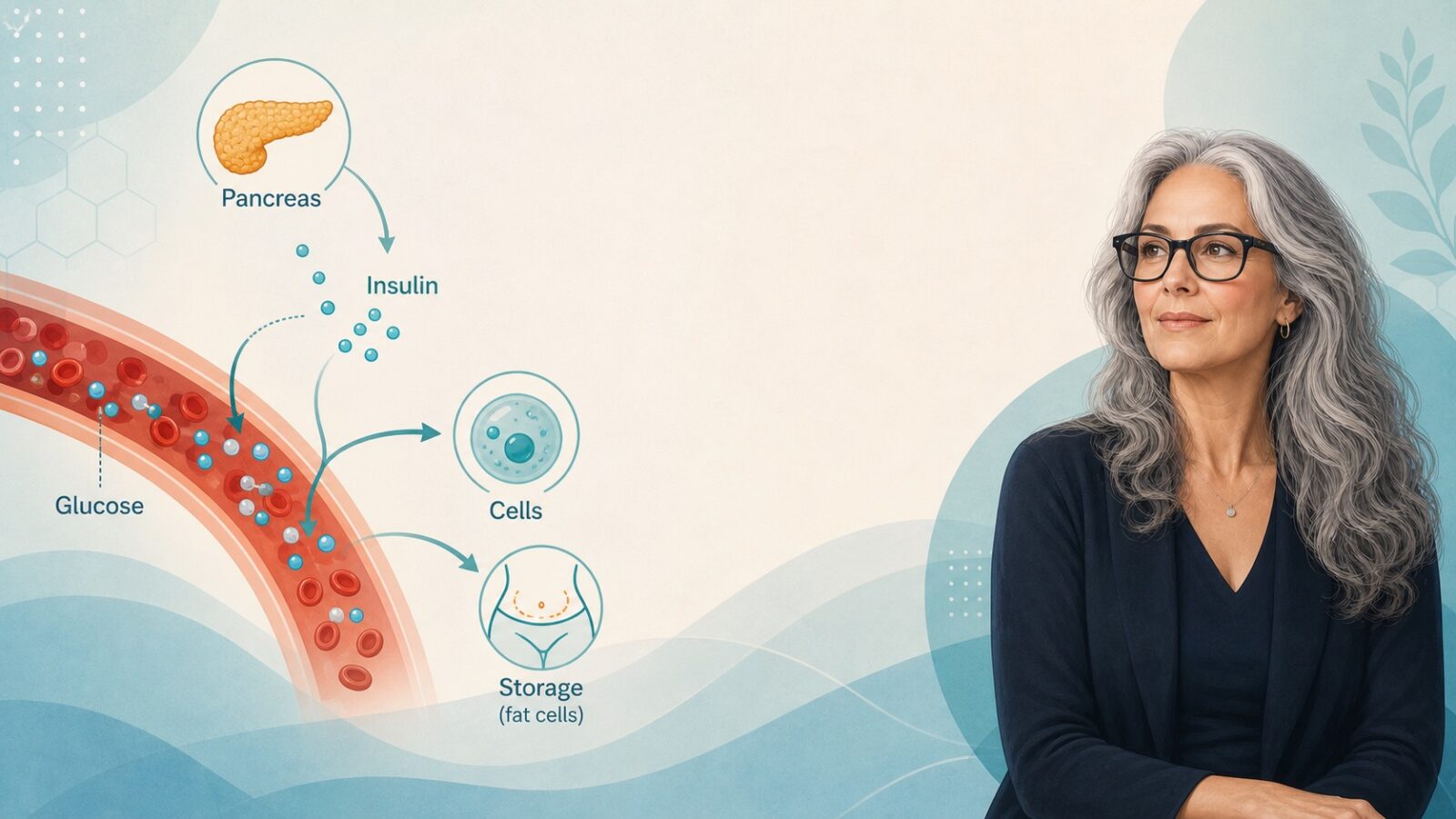
How Low Oestrogen Triggers Insulin Resistance
When oestrogen levels drop during perimenopause and menopause, something significant happens to the way your body processes sugar. Oestrogen – especially a form called 17β‑oestradiol – helps cells respond properly to insulin, the hormone that moves glucose out of the bloodstream and into your muscles and organs for energy. When oestrogen falls, cells can become less responsive to insulin, a state known as insulin resistance.
In practical terms, your body is producing insulin, but the signal is not being heard properly. Instead of glucose entering your cells to be burned as fuel, more of it lingers in the bloodstream. Your pancreas responds by releasing even more insulin, which sends a powerful message to your body to store fat – particularly around the abdomen. You can be eating a “clean” diet, swimming, walking, lifting weights, and still see barely any change on the scales.
Why Insulin Resistance Matters More Than “Willpower”
Research suggests that insulin resistance is an independent predictor of weight gain in postmenopausal women – separate from how much you eat or exercise. A large meta‑analysis of randomised controlled trials indicates that declining oestrogen levels significantly increase the risk of insulin resistance in menopausal women, and that hormone therapy can reduce that risk in some cases. For women who cannot or choose not to use HRT, or for whom HRT alone is not enough, a new class of medicines is now offering additional evidence‑based help.
What Are GLP‑1 Medicines Like Ozempic?
Before we look at whether Ozempic helps with menopause weight gain, it is important to understand the type of medicine it is.
GLP‑1 stands for glucagon‑like peptide‑1, a hormone your gut releases after you eat. It helps your pancreas produce insulin when blood sugar rises, signals your brain that you are full, and slows the rate at which your stomach empties. In people with insulin resistance, this system does not work as efficiently as it should.
GLP‑1 medicines mimic or enhance the effect of this hormone. They are not old‑fashioned appetite suppressants that simply “speed you up” or blunt hunger in the brain. Instead, they work at a hormonal level to reset how your body responds to food and manages blood sugar. For many people, hunger naturally decreases, portion sizes shrink without feeling deprived, and insulin sensitivity improves.
At the moment there are two medicines in routine use, and a third in late‑stage trials.
Does Ozempic Help With Menopause Weight Gain?
Ozempic is the brand name for semaglutide, a once‑weekly injection originally developed for type 2 diabetes. It activates GLP‑1 receptors, helping your body release insulin when blood sugar is high, slowing stomach emptying, reducing the liver’s release of glucose, and curbing appetite.
Ozempic, Wegovy and Licensing
It is crucial to know that Ozempic itself is licensed for type 2 diabetes, not for weight loss or menopause symptoms. The same drug at a higher dose is sold as Wegovy, which is the version licensed specifically for weight management in people with obesity or overweight with certain health risks. Clinical trials of Wegovy have shown average weight loss of around 13–15% of starting body weight when combined with lifestyle changes.
So where does menopause come in? Ozempic and Wegovy are not licensed specifically for “menopause weight gain”, but the underlying problem – insulin resistance and excess weight – is common during and after menopause. That means the same mechanisms that help people with obesity can also help some women struggling with weight gain in midlife, as long as they meet medical criteria and have specialist support.
What Studies Show in Postmenopausal Women
Emerging research in postmenopausal women suggests that semaglutide can significantly improve insulin sensitivity, reduce insulin resistance, lower fasting glucose and support clinically meaningful weight loss in women with overweight or obesity. In one study, women who used semaglutide together with hormone therapy lost more weight than women on semaglutide alone, hinting at a possible additive effect of improving both hormones and insulin resistance.
These findings do not mean every woman in menopause should be prescribed Ozempic. They do suggest that for women with obesity or higher‑risk weight gain, semaglutide‑based treatments can be a powerful tool alongside lifestyle and, in some cases, HRT.
Mounjaro (Tirzepatide) – A Stronger Option for Weight Loss
Mounjaro is the brand name for tirzepatide, a newer weekly injection that works on two hormonal pathways – GLP‑1 and GIP (glucose‑dependent insulinotropic polypeptide). Because it targets both, tirzepatide tends to produce larger weight‑loss results than semaglutide alone in clinical trials.
Like Ozempic, Mounjaro was first developed for type 2 diabetes. It is now also licensed for weight management in many people living with obesity or overweight and certain health conditions. In trials, tirzepatide has produced average weight loss of around 20% of starting body weight at higher doses, which is notably more than first‑generation GLP‑1 drugs.
What We Know About Mounjaro and Menopause Weight Gain
Post‑hoc analyses from major clinical programmes have shown that women living with obesity lost substantial body weight and waist circumference on tirzepatide. Some data suggest women may lose slightly more weight than men on this medicine, although research is ongoing. An observational study from the Mayo Clinic reported that postmenopausal women using both hormone therapy and tirzepatide lost more weight than those on tirzepatide alone, which again points to the potential synergy between HRT and GLP‑1‑based medicines.
For a woman asking “Will Ozempic help with menopause weight gain, or is something else better?”, these results suggest that Mounjaro can be a more powerful option for weight loss, but it comes with the same need for careful medical assessment, monitoring and lifestyle support.
Retatrutide – The Next‑Generation Drug (Not Yet Available)
Retatrutide is a triple‑acting experimental drug currently in Phase 3 clinical trials. It targets three gut hormones at once: GLP‑1, GIP and glucagon, which is why it is sometimes called a “triple‑G” drug.
In a large Phase 3 trial, people who took the higher 12 mg dose of retatrutide for around 80 weeks lost close to 28% of their body weight on average. Even lower doses produced substantial results, roughly double those seen with some first‑generation GLP‑1 drugs. These data are promising for future treatment of obesity, including in menopause, but as of now retatrutide is not approved anywhere and is only available in a research setting.
Realistically, regulatory approval and routine access are several years away. It is one to watch rather than something you can ask your GP to prescribe today.
Ozempic vs Mounjaro vs Retatrutide – Comparison at a Glance
| Feature | Ozempic / Wegovy (Semaglutide) | Mounjaro (Tirzepatide) | Retatrutide (in trials) |
|---|---|---|---|
| Type of drug | GLP‑1 receptor agonist (single pathway) | Dual GIP + GLP‑1 agonist | Triple GIP + GLP‑1 + glucagon agonist |
| Licensed use | Diabetes (Ozempic), weight loss (Wegovy) | Diabetes, weight loss | Not yet approved |
| Average weight loss in trials | Approximately 13–15% of starting weight (Wegovy doses) | Approximately 20% or more of starting weight | Approximately 19–28% of starting weight (trial data) |
| Dosing | Weekly injection | Weekly injection | Weekly injection (trial design) |
| Common side-effects | Nausea, vomiting, diarrhoea, constipation | Similar gastrointestinal side-effects | Similar gastrointestinal side-effects expected |
| Menopause‑specific data | Early data in postmenopausal women, including with HRT | Post‑menopausal women show strong responses; HRT may enhance effect | Menopause‑specific data not yet available |
| Role in insulin resistance | Improves insulin sensitivity and glucose control | Dual action may improve metabolic markers further | Expected to improve, still under study |
| Suitable for “menopause weight gain”? | Possible option if you meet weight/health criteria and have specialist care | Often more potent option under the same conditions | Not available outside clinical trials |
What These Medicines Can and Cannot Do
When we ask whether Ozempic helps with menopause weight gain, it is easy to hope for a magic fix. These medicines are powerful, but they have limits.
They cannot replace a balanced diet, movement, sleep and stress management. They are not right for everyone; people with certain conditions, such as a history of pancreatitis or specific endocrine tumours, may be advised against them. They are prescription‑only and need ongoing medical supervision, including dose adjustments and monitoring for side-effects.
Costs can also be significant. In the UK, Mounjaro and Wegovy are currently mostly available privately, whilst NHS access is limited to people meeting strict criteria through specialist weight‑management services.
What these drugs can do is help correct the hormonal and metabolic barriers that make menopause weight loss so hard. For the right woman, they can be a bridge that makes lifestyle changes more effective and sustainable.

Ozempic, Menopause Symptoms and Belly Fat
Many women are not just asking “Does Ozempic help with menopause weight gain?” but also whether it helps with classic menopause symptoms such as hot flushes, sleep issues or mood changes.
- The primary effect of Ozempic and similar GLP‑1s is on blood sugar regulation, appetite and weight.
- Some women report improvements in energy, mobility, joint pain and mood as their weight and metabolic health improve.
- A few early studies and clinical observations suggest possible benefits on hot flushes and metabolic‑driven symptoms, but these are not official indications and evidence is still evolving.
When it comes to “menopause belly fat”, these medicines can reduce overall and visceral fat in people with obesity. Because menopause weight gain often shows up around the midsection, many women do see changes in their waist measurements when they respond well to GLP‑1s.
Does Ozempic Help With Menopause Weight Gain for Everyone?
The honest answer is: no. These medicines are most effective for women who:
- Have obesity or overweight with other health risks
- Show signs of insulin resistance or type 2 diabetes
- Are willing to commit to long‑term lifestyle changes alongside medication
- Have been properly assessed by a clinician familiar with menopause and obesity medicine
Even when Ozempic does help with menopause weight gain, weight can creep back up if the drug is stopped and underlying habits, muscle mass and sleep are not supported. That is why many specialists talk about GLP‑1s as long‑term tools rather than short‑term fixes.
Alternatives and Complements to Ozempic in Menopause
If you suspect insulin resistance is contributing to your weight struggles, the first step is a conversation with your doctor or GP. You can ask about:
- Fasting glucose, fasting insulin and HbA1c
- Cholesterol and triglyceride levels
- Blood pressure and waist circumference
For some women, optimising HRT, focusing on adequate protein and resistance training, improving sleep and addressing stress can make a meaningful difference on their own. Others may benefit from a combination of HRT, lifestyle changes and, where appropriate, a GLP‑1‑based medicine.
Frequently Asked Questions
Is Ozempic approved for menopause weight gain?
No. Ozempic is licensed for type 2 diabetes, and its sister drug Wegovy is licensed for weight management in people who meet specific BMI and health‑risk criteria. Neither is officially approved solely for “menopause weight gain”, even though the underlying weight‑ and insulin‑related issues often appear during menopause.
Can Ozempic help if I am on HRT?
Early studies in postmenopausal women suggest that HRT and GLP‑1‑based medicines can sometimes work better together than either treatment alone for weight loss. However, this combination is not suitable for everyone and should only be considered with a clinician who understands your full medical history.
Will I regain weight after stopping Ozempic or Mounjaro?
Many people do regain some weight after stopping GLP‑1 medicines, especially if lifestyle changes are not in place or if the drug is stopped abruptly. Planning a gradual transition, focusing on protein intake, strength training and realistic habits can help reduce rebound weight gain, but it may not prevent it completely.
How do I know if Ozempic is right for my menopause weight gain?
Only a healthcare professional who knows your medical history can answer that. In general, you will need to meet BMI and health‑risk criteria and be willing to commit to close monitoring and lifestyle changes. If your weight is in the healthy range but you dislike redistribution (more belly fat), lifestyle‑ and HRT‑focused approaches may be more appropriate than GLP‑1s.
References
- Harvard Health Publishing – GLP‑1 diabetes and weight‑loss drug side-effects (including Ozempic)
- Harvard Health Publishing – Diabetes drugs may improve risks for some conditions, but worsen others
- Mayo Clinic – Combination of hormone therapy and tirzepatide linked to greater weight loss after menopause
- ScienceDaily (Endocrine Society / Mayo Clinic) – Hormone therapy supercharges tirzepatide after menopause
- PubMed Central – Body weight reduction in women treated with tirzepatide by reproductive stage
- PubMed – Weight loss response to semaglutide in postmenopausal women with overweight or obesity
- PubMed – Hormone therapy and insulin resistance in non‑diabetic postmenopausal women: systematic review and meta‑analysis
- The Menopause Society – New meta‑analysis shows that hormone therapy can significantly reduce insulin resistance
Disclaimer – This article is for information only and does not constitute medical advice. Always consult your GP or healthcare provider before starting, stopping or changing any medicine, including Ozempic, Wegovy, Mounjaro or other GLP‑1‑based treatments. You should never stop or alter any treatment because of something you have read on Silverlocks.