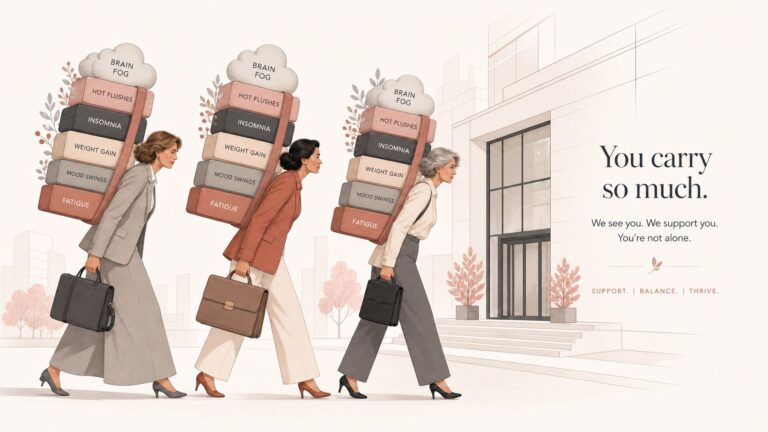
If you have ever sat through a meeting quietly fanning yourself, forgotten a word mid-sentence, or dragged yourself through a presentation on three hours of sleep, you are not alone. Millions of women are doing exactly that, every single day, while navigating menopause at work. And for a very long time, they were expected to just get on with it.
That is finally beginning to change. Menopause and workplace policy are no longer separate conversations. Across the UK and beyond, employers are being asked, and increasingly required, to put proper support in place. In this article, we look at why this matters so much, what the law actually says, why menopause belongs in health, wellbeing and DEI policies, and what good support should look like in practice.
The Demographics: Who Is Actually in the Workforce Right Now
To understand why menopause and workplace policy matter so much, it helps to look at who is actually sitting at those desks and joining those video calls.
Women over 50 are one of the fastest-growing employment groups in the UK and across most of the developed world. Labour force participation among women aged 55 to 64 has risen steadily over the past two decades, and many women are now working well into their 60s.
That means the vast majority of women will experience perimenopause and menopause while they are still in full-time employment, often at the peak of their careers. This is not a niche issue affecting a small minority. It is a mainstream workforce reality that touches almost every organisation, team, and workplace in the country. And yet, according to the CIPD, only around a quarter of employers have any kind of dedicated menopause support in place.
How Menopause Symptoms Affect Performance and Attendance
When most people think of menopause, they picture hot flushes. And yes, those are very real. But the symptoms that affect women most at work are often the ones nobody talks about openly.
According to a large-scale study published in Mayo Clinic Proceedings, the symptoms most likely to affect work outcomes include:
- Brain fog and difficulty concentrating — forgetting words, losing a train of thought, struggling to process information at the usual speed
- Sleep disruption — night sweats and insomnia that make exhaustion a daily reality
- Hot flushes — sudden, intense heat that is impossible to hide in a meeting room or on a video call
- Anxiety and mood changes — feeling overwhelmed or on edge in situations that would previously have been manageable
- Fatigue and joint pain — a persistent tiredness that significantly reduces energy and stamina across the working day
The impact on attendance is significant. The same Mayo Clinic study found that approximately 11% of employed women had missed days of work because of menopause symptoms, with a median of three missed days per year. Across the US workforce, researchers estimated the annual cost of menopause-related lost workdays at $1.8 billion. In the UK, the cost to employers and the wider economy runs into hundreds of millions of pounds annually.
Beyond absenteeism, there is the harder-to-measure cost of presenteeism: women who show up but are operating well below their usual capacity because their symptoms are unmanaged and unsupported. A mixed-methods study found that many women reported a significant gap between how they knew they could perform and how they were actually performing during this period, with most unsure how to raise the issue at work.
The Career Cost Women Are Paying
The individual career impact is striking. CIPD research found that more than a quarter of women say menopause has had a negative impact on their career progression. Around 17% have considered leaving their job due to a lack of support, and 6% have already left. For women who also have a disability or long-term health condition alongside menopause symptoms, those figures are even higher.
These are not underperformers. These are skilled, experienced professionals, many at senior levels, quietly stepping back or walking out the door because nobody thought to ask how they were managing. That is a significant loss of talent, institutional knowledge, and leadership that no organisation can afford to ignore.
Research also links menopause to the gender pay gap. The Office for National Statistics has noted that the gender pay gap is at its widest for women over 50, partly because women reduce hours, decline promotions, or disengage from development opportunities during this period.
Addressing menopause at work is therefore not just a wellbeing issue. It is an equality issue too.
The Legal Framework: Disability, Age, and Sex Discrimination
Many women are unaware of how much legal protection they already have. In the UK, menopause is not yet a standalone protected characteristic under the Equality Act 2010. However, it intersects with three existing protected characteristics in ways that create real legal obligations for employers.
Disability: If menopause symptoms have a substantial and long-term effect on a woman’s ability to carry out normal day-to-day activities, they can legally constitute a disability. This was confirmed in the landmark case of Rooney v Leicester City Council, where the Employment Appeal Tribunal ruled that the original tribunal had applied the wrong test, focusing on what the claimant could do rather than what she could not. When symptoms qualify as a disability, employers have a legal duty to make reasonable adjustments.
Sex discrimination: Treating a woman unfavourably because of menopause symptoms can amount to direct sex discrimination, since menopause is a condition specific to women. Dismissing symptoms, refusing adjustments, or making derogatory comments can all trigger claims.
Age discrimination: Since menopause predominantly affects women between the ages of 45 and 55, unfavourable treatment linked to symptoms can also constitute age discrimination under the same Act.
The number of employment tribunal cases citing menopause rose by 44% in 2021, and the trajectory has continued upward ever since. Cases have resulted in awards for harassment, unfair dismissal, and failure to make adjustments. The legal risk for employers who do nothing is real and growing.
What the Employment Rights Act 2025 Means in Practice
The Employment Rights Act 2025 has introduced new formal accountability. From April 2026, large employers with 250 or more staff are encouraged to publish Equality Action Plans that explicitly address menopause support. From spring 2027, this becomes a legal requirement. As ACAS explains, these plans must go beyond statements of intent and set out concrete actions.
Importantly, employers with fewer than 250 staff are not exempt from their duties under the Equality Act or health and safety legislation. The size of an organisation does not reduce its legal obligations towards employees experiencing menopause.
Why Menopause Belongs in Health, Wellbeing, and DEI Policies
For too long, menopause has been treated as a personal matter rather than an organisational one. That framing needs to change, and menopause and workplace policy need to be integrated into three areas that every serious employer should already have in place.
Health and wellbeing policies should name menopause explicitly. Wellbeing strategies that cover mental health, stress, and chronic illness but make no mention of menopause are leaving a significant gap. Women need to see themselves reflected in their employer’s approach to health, and know that menopause-related sick leave will be handled with sensitivity rather than used as a trigger for disciplinary action.
Diversity, equity and inclusion strategies must also address menopause. As Catalyst’s 2025 best practices guide notes, menopause intersects directly with gender equity and age inclusion. Only 17% of employers currently offer any dedicated menopause support, according to the Society for Human Resource Management’s 2024 benefits survey. Organisations that are serious about retaining experienced women need menopause on their DEI agenda, alongside parental leave, flexible working, and equal pay.
Risk assessment processes represent a third, often overlooked area. Under the Management of Health and Safety at Work Regulations, employers already have a legal duty to assess health and safety risks to all employees. That duty extends to menopause.
Risk assessments should consider temperature control, access to toilet facilities, ventilation, rest areas, the demands of specific roles, and whether shift patterns or travel requirements make symptoms harder to manage. Once risks are identified, employers are legally required to act on them.

What a Good Menopause Workplace Policy Should Include
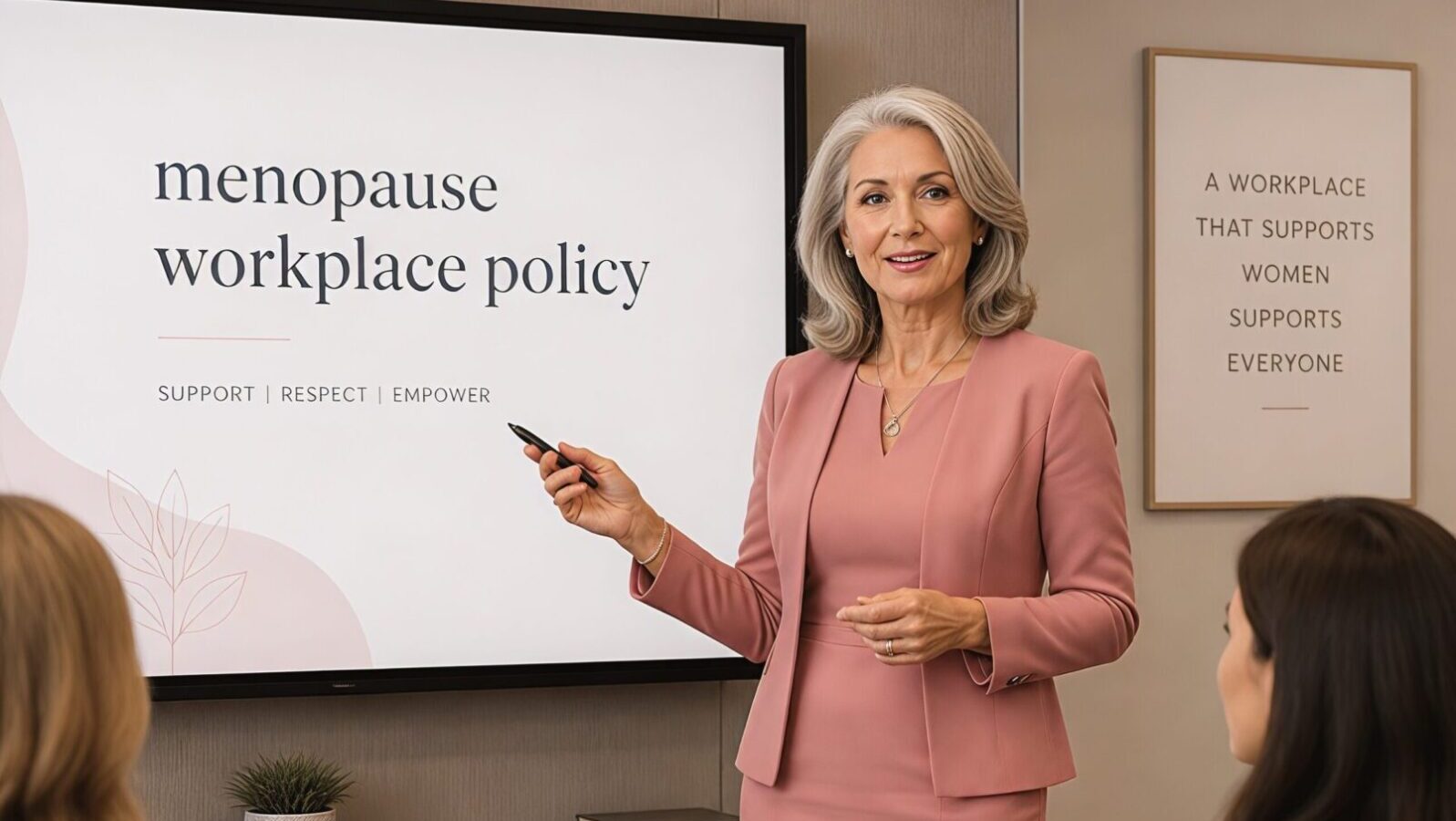
A menopause workplace policy does not need to be a lengthy, complicated document. What it does need to be is genuine. Here is what good support looks like in practice.
Flexible working arrangements
Flexibility is consistently the most valued form of support. The ability to adjust start times, work from home on difficult days, or take extra breaks during severe symptoms can make an enormous difference to how manageable work feels during this period.
A comfortable physical environment
Access to fans or cooler workspaces, cold drinking water, nearby toilet facilities, a quiet rest area, and flexible uniform or dress code guidance are all practical, low-cost adjustments. These are specifically recommended in the UK Government’s 2026 employer guidance.
Manager training and clear responsibilities
Managers are the frontline of menopause support, and many feel ill-equipped to handle these conversations. Training should cover what menopause symptoms look like in practice, how to raise the subject sensitively, how to agree and document reasonable adjustments, and when to refer to HR or occupational health.
Managers do not need to be experts in menopause. They do need to know how to listen, and what to do next.
Separate and sensitive absence recording
Menopause-related absences should be recorded separately and should not automatically count towards absence triggers or disciplinary thresholds. Women should also have the option to report symptoms to a female manager or a nominated point of contact if they prefer.
Confidential support channels
Whether through a trained HR contact, a menopause champion, an occupational health referral pathway, or an employee assistance programme, women need a safe and confidential route to seek support without worrying that doing so will affect how they are perceived or their career prospects.
Culture and awareness
Policy documents matter. Culture matters more. Normalising menopause as a workplace topic, through awareness sessions, manager briefings, intranet resources, and leadership visibility, creates the environment in which policies can actually work.
When women see that speaking up is safe and accepted, everything else follows.
What Women Can Do Right Now
Knowing your rights is the first step. If symptoms are significantly affecting the ability to work, reasonable adjustments can be requested, and an employer who refuses without good reason may be acting unlawfully.
The ACAS menopause at work guidance is a clear, practical resource worth bookmarking.
Women can also be the ones to start the conversation. Raising menopause as a workplace issue, whether in a team meeting, with an HR representative, or simply by talking openly with a trusted colleague, normalises it a little more each time.
The more women speak up, the harder it becomes for any employer to ignore.
And for those who manage teams or run their own businesses, there is an opportunity to lead by example. A proper menopause and workplace policy does not require a large HR department or a significant budget. It requires empathy, a willingness to listen, and practical adjustments that often cost very little but mean a great deal to the women experiencing them.
The Bigger Picture
At its heart, menopause and workplace policy is about a straightforward principle: recognising women as whole, complex, valuable professionals at every stage of their working lives. Not expecting them to perform at their best while quietly managing symptoms alone. Not penalising them for a natural biological process that affects half the population.
Women, nowadays, are living and working longer than any previous generation. They bring decades of experience, perspective, and skill to everything they do. The workplaces that recognise this, that understand experienced women do not become less valuable with age, are the ones that will retain their best people and be stronger for it.
Menopause does not have to mean stepping back. With the right support in place, it can simply mean moving forward.
Has your employer ever addressed menopause at work? Is there a policy in place, or does it feel like the conversation has never been had? Share your experience in the comments below.
References
-
ACAS – Menopause at Work: Supporting Staff Through the Menopause
-
GOV.UK – Offer Workplace Adjustments for Employees Experiencing Menopause
-
The Menopause Society – Making Menopause Work: Employer Guide
Disclaimer – This article is for general information only and does not replace personal medical, legal or occupational health advice. Menopause symptoms and work situations vary from person to person, and what is appropriate in one workplace may not be suitable in another. Always speak to a qualified healthcare professional about your own symptoms and treatment options, and seek independent advice (for example from HR, a union representative or an employment adviser) if you have concerns about your rights at work. Never ignore, delay or change medical advice because of something you have read on Silverlocks.