If you’re over 45 and noticing leaking, a feeling of heaviness “down there”, or pelvic discomfort, you’re far from alone. Pelvic floor problems in menopause are incredibly common. And if you’re also hypermobile – whether that’s being naturally very flexible or living with HSD or hEDS – your body may feel as if it has become even harder to predict.
This isn’t about you doing anything wrong or not “doing enough Kegels”. It’s about understanding how hormones, connective tissue and hypermobility interact in the pelvis, so you can respond in a way that actually fits your body rather than fighting against it.
Your pelvic floor is a supportive sling of muscles and connective tissue sitting at the base of your pelvis. It helps to hold up your bladder, uterus and bowel, and it plays a role in bladder control, bowel control, sexual comfort and core stability.
How menopause changes the pelvic floor
During perimenopause and menopause, oestrogen levels fall and then remain low. That matters because oestrogen receptors are found throughout the bladder, urethra, vaginal tissue and pelvic floor structures.
When oestrogen declines, several things can happen quietly over time:
- Tissues can become thinner and drier, which may lead to irritation or discomfort.
- Blood flow and natural lubrication often reduce.
- The supporting tissues of the pelvis may lose some resilience.
- Muscles can become less responsive, and connective tissue may not behave quite as it once did.
For many women, this creates a gradual shift where symptoms such as urgency, leaking or a sense of pelvic heaviness begin to appear – even if they’ve never been an issue before.
Where hypermobility changes the picture
If you’re hypermobile, your connective tissue already behaves differently because of variations in collagen. That same flexibility that affects your joints can also influence the ligaments and fascia supporting the pelvic organs.
This doesn’t mean something is “wrong”, but it does mean the pelvis may have less built‑in structural support.
In clinical experience and emerging research, women with HSD or hEDS are more likely to experience:
- Pelvic organ prolapse
- Stress and urge incontinence
- Pelvic pain or pain during sex
- Bowel symptoms linked to pelvic floor dysfunction
The pelvic floor itself can respond in different ways. Some people experience a more under active system that struggles to provide support. Others develop a tight, overactive pattern – almost as if the muscles are constantly bracing to compensate for instability or discomfort. And many people experience a mixture of both, depending on the day or activity.
This is one of the reasons generic advice like “just strengthen your pelvic floor” doesn’t always help – and sometimes makes things worse.
Why pelvic floor problems in menopause get worse if you are hypermobile
If your connective tissue is naturally more elastic, the hormonal changes of menopause can reduce its supportive quality even further. The pelvic floor may simply have less reserve to cope with everyday strain – things like lifting, coughing, or years of pressure from constipation or pregnancy.
At the same time, many hypermobile women are already managing chronic pain, fatigue or joint instability. When menopause adds sleep disruption, hot flushes and mood changes, there’s often less physical and emotional energy available for the constant background work of stabilising the body.
Bowel function can also play a role. Constipation is more common in hypermobility, and straining repeatedly places extra downward pressure on the pelvic floor, which can gradually contribute to symptoms over time.
None of this is your fault. It’s simply how overlapping systems in the body can interact. And, importantly, there is support available.
Signs your pelvic floor may need attention
Every woman’s experience is different, but some common signs include:
- Leaking when you cough, laugh, run or lift something heavy
- A sensation of pressure or fullness in the vagina, or a feeling that something is “not quite right” internally
- Needing to rush to the toilet more often, or not quite making it in time
- Difficulty fully emptying the bladder or bowel
- Pelvic pain – sometimes as a deep ache, sometimes as sharp or localised discomfort around the pubic bone or tailbone
- Pain during sex or during pelvic examinations
- Constipation that occasionally requires manual support to pass stool comfortably
If you recognise yourself in any of this, it’s worth remembering that symptoms are information – not a judgement on your body.
Can pelvic floor exercises help?
They absolutely can – but only when they’re tailored to your specific situation.
Pelvic floor exercises can be helpful for improving bladder control, supporting prolapse symptoms and improving strength and awareness. The key detail is that not every pelvic floor needs the same approach.
For some people, the muscles need building up gradually in strength and endurance. For others, the priority is learning how to release unnecessary tension before adding any strengthening work. And for many hypermobile women, both of these things need to happen in a carefully balanced way.
This is why a personalised assessment can make such a difference. It removes the guesswork and helps ensure you’re not accidentally reinforcing a pattern that isn’t serving you.
What actually helps
There isn’t a single fix, but there are several gentle, effective ways to support your pelvic floor in midlife.
1. A pelvic health physiotherapy assessment
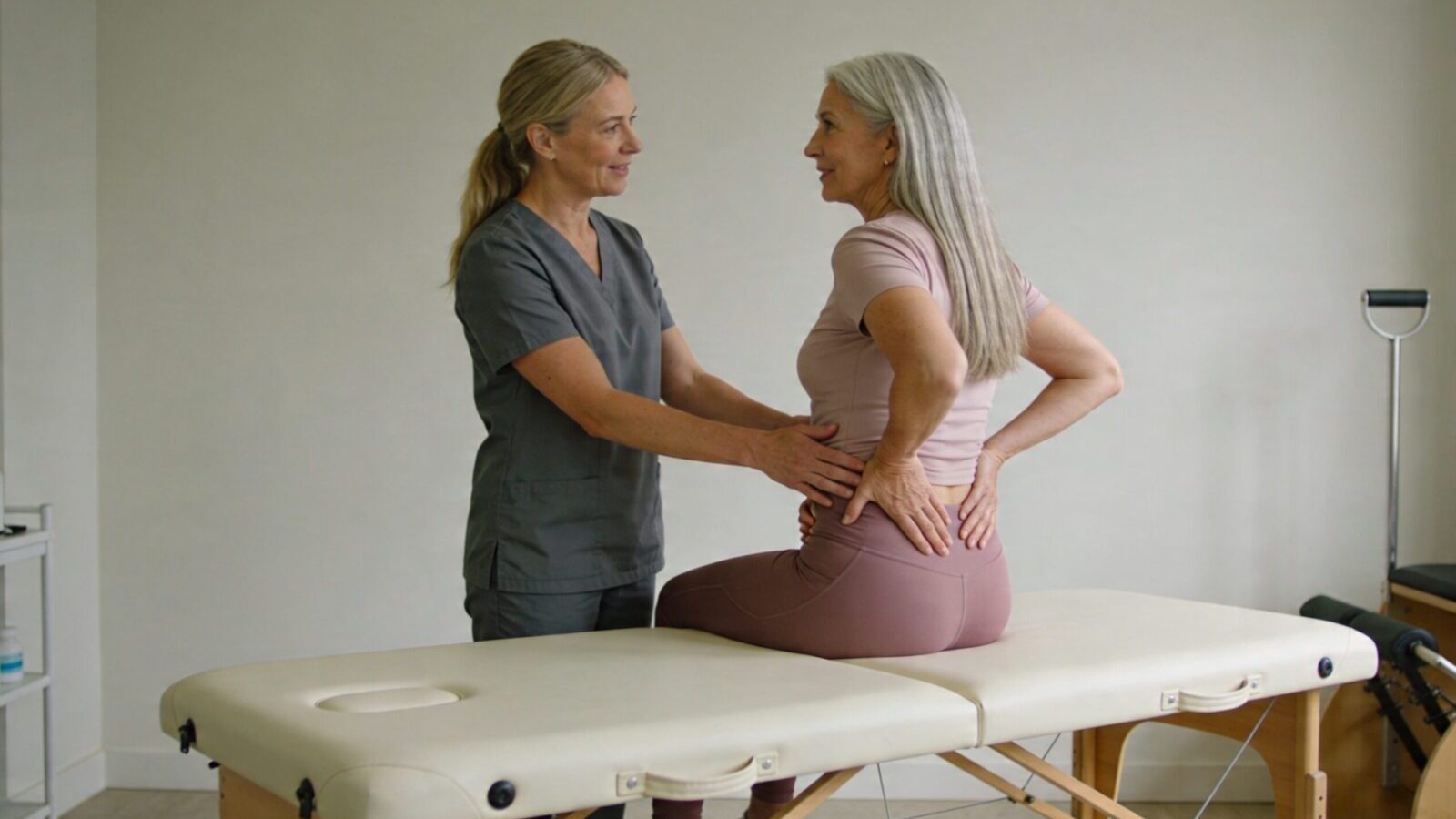
If you can access one, this is often the most helpful starting point. A pelvic health physiotherapist can assess how your pelvic floor is functioning, how it co‑ordinates with breathing and posture, and whether prolapse or tension is playing a role.
They can then tailor a plan that fits your body specifically, including your level of hypermobility. Many people find this takes a huge amount of uncertainty out of the process.
2. Local oestrogen support
It can be worth speaking to a healthcare professional about local vaginal oestrogen if you’re experiencing dryness, irritation, urinary symptoms or recurrent infections.
Unlike systemic HRT, this is a low‑dose treatment that works mainly on local tissues. It can improve comfort, support tissue resilience and often makes rehabilitation work easier and more comfortable.
It’s not suitable for everyone, but it’s frequently under‑discussed and under‑offered, so it’s worth bringing up if your symptoms fit.
3. Supporting your bowel without pressure or strain
Your bowel and pelvic floor are closely connected, and reducing strain can make a meaningful difference over time.
Simple supportive habits include:
- Staying well hydrated across the day
- Eating a range of fibre that your gut tolerates comfortably
- Using a small footstool when you’re on the toilet so your knees are slightly higher than your hips
- Taking your time, without rushing or straining
If constipation is persistent, it’s worth seeking medical support rather than managing it alone – because reducing strain is one of the most protective things you can do for your pelvic floor.
4. Moving and lifting in a way that protects your pelvic floor
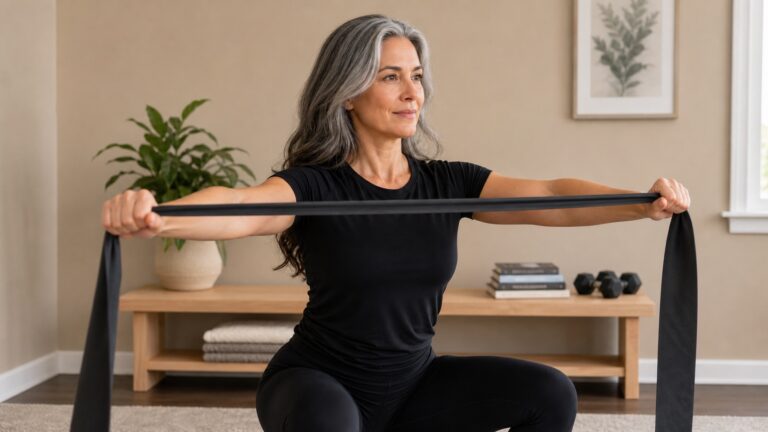
Movement is still important in menopause – for bones, muscles, joints and overall health. The goal isn’t to avoid lifting or exercise, but to adjust how you do it.
You can try:
- Exhaling gently during effort (rather than holding your breath) to reduce downward pressure on the pelvic floor
- Keeping loads close to your body when you lift
- Spreading physically demanding tasks across the week instead of squeezing them into one day
- Favouring low‑impact exercise if high‑impact activities trigger leaking or heaviness
Strength training is still valuable – just introduced at a pace that feels supportive rather than overwhelming.
5. Calming an overactive or “braced” pelvic floor
For some hypermobile women, the pelvic floor is not weak but overworking – holding tension without being asked to.
This can show up as pelvic pain, discomfort with penetration, difficulty starting urination, or a general sense of clenching.
In these cases, the first step is often learning how to let go rather than build more strength.
Gentle diaphragmatic breathing can help, especially when you allow the belly and pelvic floor to soften on the in‑breath. Positions that support relaxation – such as lying with calves supported on a chair or resting in a supported child’s pose – can also help the body experience ease again.
This isn’t about “fixing” anything quickly. It’s about giving your system permission to stop bracing all the time.
When to seek extra help
It’s always worth getting checked if you notice new or worsening symptoms such as persistent leaking, a feeling of bulging or pressure that doesn’t settle, ongoing pelvic pain, or recurrent urinary infections.
You should also seek medical advice for symptoms like bleeding after sex, unexplained weight loss, or severe or worsening pain.
The most helpful professionals to involve are usually your GP or gynaecologist, a pelvic health physiotherapist, and – if relevant – a menopause‑aware clinician who understands midlife hormonal changes.
A final word
Pelvic floor symptoms are incredibly common in menopause, and even more so when hypermobility is part of the picture. But common doesn’t mean something you simply have to live with.
Your body is adapting to a combination of hormonal and structural changes that deserve understanding.
With the right support, a bit of curiosity and a more tailored approach, many women find they can feel more comfortable, more confident and more at ease in their bodies again – even if things don’t return exactly to how they were before.
References
- National Library of Medicine – Pelvic floor dysfunction in menopause
Disclaimer – The information on Silverlocks is for general educational purposes only and is not a substitute for individual medical advice, diagnosis or treatment. It is based on current evidence and my own experience as a hypermobile, post‑menopausal woman, but I am not your doctor. Always speak to a qualified healthcare professional – such as your GP, gynaecologist or pelvic health physiotherapist – about your own symptoms, medications and treatment options, especially before starting or changing any therapy or exercise programme. Never ignore professional medical advice or delay seeking it because of something you have read on this site.